A damp garage is rough on everything that matters: bare metal, electrical connectors, brake rotors, cardboard parts boxes, and the tools you paid good money for. Finding the best dehumidifier for garage duty is not about buying the biggest machine on the shelf. It is about matching capacity, temperature range, drainage, and construction to the space you actually have. I have seen a clean project car develop surface rust because its owner treated the garage like an indoor room and ignored the humidity.
Why garage humidity is harder to control
Garages are usually less sealed than basements or bedrooms. The overhead door leaks air around its edges, concrete floors hold moisture, and a vehicle can bring in rain or snow on its tires and undercarriage. In summer, warm damp air rolls in every time the door opens. In winter, a standard compressor dehumidifier can struggle when the garage temperature drops below about 60 degrees Fahrenheit because its coils can ice up.
That last point matters more than a fancy control panel. If you heat the garage regularly, a conventional unit rated around 35 to 50 pints per day can work well. If the building stays cold, look for a model specifically designed for low-temperature operation, often with auto-defrost. A cheap bedroom unit that freezes solid beside your tool chest is not a bargain; it is a noisy floor ornament.
For most one- or two-car garages, the best dehumidifier for garage use sits in the 35-pint range when the space is moderately damp. A wet garage with condensation on the door, a floor drain, or a history of rust may need a 50-pint unit. Capacity ratings are based on test conditions, so real-world performance drops in colder spaces. Give yourself some headroom rather than running a small machine nonstop.

What to look for before spending your money
Start with the humidity target. A garage holding a project car, spare engines, and steel shelving generally feels comfortable around 45% to 55% relative humidity. You do not need to turn the place into a desert. Extremely dry air costs more electricity and can be hard on some stored materials, while humidity above 60% gives rust and mildew a much easier shot.
Continuous drainage is the feature that saves the most aggravation. A bucket is fine for a basement laundry room, but it is a nuisance in a working garage. Look for a hose connection that can run to a floor drain, utility sink, or condensate pump. If the drain has to travel uphill, buy a unit with an internal pump or add a proper condensate pump rated for the job. Do not balance a hose over a five-gallon bucket and assume you will remember to empty it after a late-night wrenching session.
Controls should include an adjustable humidistat, automatic restart after a power outage, and an easy-to-clean filter. Wi-Fi is optional. It can be handy if you want an alert while traveling, but remote control will not fix a leaking garage door or a unit placed against a wall with no airflow. Leave the manufacturer’s recommended clearance around the intake and exhaust, usually several inches at minimum.
Garage dehumidifier types that make sense
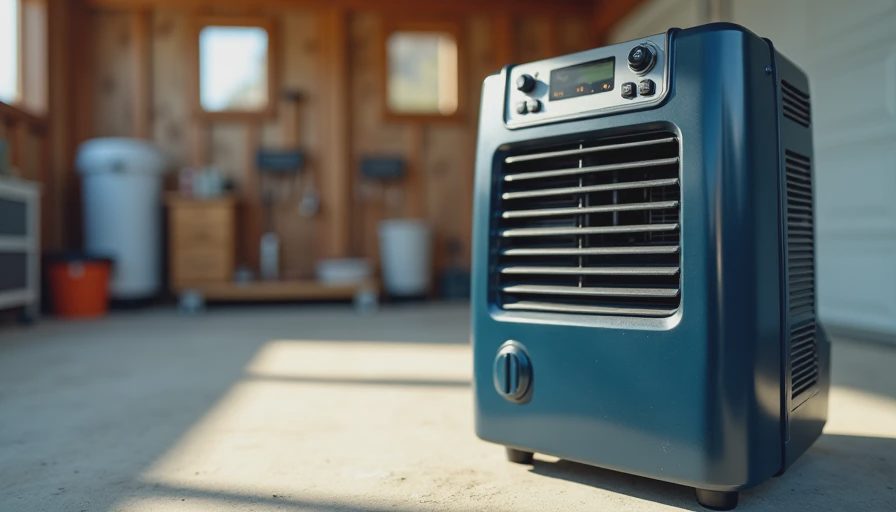
A portable compressor unit is the sensible choice for most attached garages. Frigidaire, Midea, GE, and hOmeLabs all sell familiar portable designs in the 35- to 50-pint class. Their advantages are price, easy replacement, and decent efficiency in moderate temperatures. Expect roughly $180 to $350 for a useful model, with sales changing that number during spring and summer.
A low-temperature or basement-rated compressor model costs more but earns its keep in an unheated northern garage. Look at brands such as AlorAir or Santa Fe when the space is large, persistently wet, or valuable enough to justify commercial-grade equipment. These systems often cost $700 to more than $1,500, but they are built for longer duty cycles, better drainage, and tougher conditions. For a three-car workshop with a classic car inside, that extra cost can make sense.
Desiccant dehumidifiers use a moisture-absorbing wheel rather than a cold coil. They perform better in cold spaces, but they commonly use more electricity and remove less moisture per day. They fit a small, unheated garage or a storage area where the temperature stays low and moisture control is occasional. Avoid tiny plug-in closet units for a full garage. They might protect a gun safe or a cabinet, but they will not control the air around a pickup and a stack of lumber.
Placement, setup, and the mistakes that cause rust
Put the machine on a level surface with open air around it, preferably near the dampest section of the garage. Keep it away from grinding dust, welding smoke, and direct spray from a sink. Metal dust can foul the filter and internal coil, while fine bodywork dust can shorten the life of the fan. If you are sanding filler or spraying paint, turn the unit off and protect it; a dehumidifier is not a substitute for ventilation or a properly rated respirator.
Close the garage door and windows while the machine runs. Otherwise, you are paying to dry the neighborhood. Seal obvious gaps with replacement door seals, and repair roof or foundation leaks before buying a larger appliance. A $40 bottom seal can do more for humidity than upgrading from a 35-pint unit to a 50-pint unit.
Set the humidistat near 50% and let the machine run for a full day before judging it. Check the bucket or drain hose, listen for icing, and use a basic hygrometer on the opposite side of the garage. If the dehumidifier says 50% but a separate meter says 68%, airflow or placement may be the problem. Keep doors on tool cabinets closed, store bare steel with a light corrosion-inhibiting film, and do not park a wet vehicle nose-to-tail with stored parts until it has dried.
My practical buying recommendation
For a typical attached two-car garage that stays above 60 degrees, I would start with a reliable 35-pint compressor unit, an adjustable humidistat, and a continuous drain connection. That combination usually delivers the best balance of purchase price, noise, and operating cost. If condensation is common or the garage contains an unfinished car body, step up to 50 pints and plan the drain before the unit arrives.
For an unheated garage in a cold climate, the best dehumidifier for garage conditions is one with low-temperature operation and automatic defrost. For a large workshop, choose a commercial-style unit with a pump or gravity-drain option instead of chaining together two cheap household machines. Two small units can work, but they double the filters, fans, cords, and opportunities for a full bucket.
I would skip vague “energy saver” claims and focus on the warranty, replacement filters, operating temperature, and noise rating. A machine that runs at 50 decibels may be acceptable beside a workbench; one that sounds like a shop vacuum can get old fast. The best dehumidifier for garage use is the one you will leave installed, drained, and maintained rather than dragging out after rust has already appeared.
A simple maintenance routine
Clean the filter every two to four weeks during humid weather, or sooner if you grind, sand, or work around sawdust. Inspect the drain hose for kinks and algae buildup, and vacuum dust from the intake grille. Once a season, check for water around the base, unusual compressor cycling, and ice on the coil. If the unit starts icing repeatedly in a warm garage, airflow or refrigerant trouble could be involved.
Keep a hygrometer visible near the car and write down the humidity after heavy rain, snow melt, and major temperature swings. That tells you whether the machine is actually solving the problem. If humidity remains high after several days, inspect the building envelope instead of simply buying more capacity. A leaking roof, wet concrete, or unsealed door can overwhelm even the best dehumidifier for garage storage.
Protecting a project car is the whole point. Dry air will not repair a bad paint job or save a neglected battery, but it will slow surface rust, reduce musty odors, and keep tools ready for the next weekend under the hood. Pick the right capacity, provide a real drain, and spend a few minutes sealing the garage. That is money better spent than replacing rusty hardware later.