Classic trucks are easy to love and easy to overpay for. I have seen guys fall for fresh paint, then find out the cab corners are full of filler and the title is a mess. If you are shopping classic trucks for a weekend driver, a shop project, or a long-term hold, the smart move is to look at value the same way an adjuster or appraiser would: condition, documentation, storage, and how the truck is actually used. That is where the real numbers live, not in the shine.
Rust, paperwork, and what the eye misses
A good-looking truck can hide expensive problems in plain sight. On a 1960s or 1970s half-ton, I care first about the frame, the cab mounts, the floor pans, and the bed supports. Doors that shut right matter. So does a title that matches the VIN plate and the paperwork trail. A truck with clean sheet metal and a solid title can be worth several thousand dollars more than the same rig with patchwork repairs and a missing history file. That is not collector snobbery. That is the difference between a truck you can insure cleanly and one you have to explain every time you call for a quote.
When I look at classic trucks, I also pay attention to what has been changed. A stock 350 with a four-barrel and decent cooling is easy to live with. A home-built swap with hacked wiring, a mystery fuel system, and mismatched brakes is where money disappears. If the seller cannot tell you what parts are on it, assume you will be the one sorting it out later.
How insurers look at the numbers
Most standard auto policies treat a truck like a truck, which is fine for a daily driver and not so great for a weekend toy. Collector specialists handle this better. Companies like Hagerty and Grundy are known for agreed-value coverage, while mainstream carriers like GEICO, Progressive, and State Farm are usually better for everyday use and standard risk profiles. The big difference is how the truck is valued if something goes wrong.
With agreed-value coverage, you and the carrier settle on a number up front. If the truck is totaled, that number is the starting point, not some auction guess after the fact. That matters for classic trucks because parts, labor, and paint work add up fast. A decent repaint can run $8,000 to $20,000. A correct engine rebuild can cost another $4,000 to $10,000. You do not want a policy that prices the truck like a worn-out farm pickup when you have real money in it.
Most collector policies also expect limited use, a locked garage, and a clean driving record. That is not a trap. It is how they keep premiums reasonable for hobby vehicles.
Appraisal, restoration, and real value
If the truck is worth more than your average square-body, get an appraisal or at least build a paper trail. Receipts for bodywork, engine parts, upholstery, and wheels matter. Photos from the frame-off stage matter. A folder with invoices from LMC Truck, Summit Racing, RockAuto, or a local trim shop gives an appraiser something solid to work with. Without that, the value of classic trucks gets argued down the first time you need to file a claim.
A fair appraisal should cover the truck as it sits, not as a dream build in your head. If you have $18,000 into a truck that still needs paint, that is not the same thing as a finished $18,000 truck. Restorations are where people get emotional and lose track of the ledger. I have watched a clean running pickup turn into a $30,000 project because the owner kept saying, “I already did most of it.” The parts pile does not care what you already hoped for.
Where the money goes during a build
This is where classic trucks separate the smart buyer from the guy who keeps handing over cash. A suspension refresh can be $1,500 to $4,000. Brake upgrades can land between $700 and $2,500. Tires, wheels, interior work, and weatherstripping all stack up. Then there is labor if you are not doing every hour yourself. Even a simple bed-floor replacement can snowball once hidden rust shows up around the crossmembers and stake pockets.
Insurance should match that build path. If the truck starts as a $9,000 runner and you are slowly turning it into a $25,000 driver, update the policy when the money goes in. I have seen claims go sideways when the owner never told the carrier the truck had moved well past the original number. That is an easy mistake to avoid. Keep receipts, keep photos, and keep the policy in step with the work. It takes ten minutes and can save you a stupid fight later.
Storage, theft, and the off-season
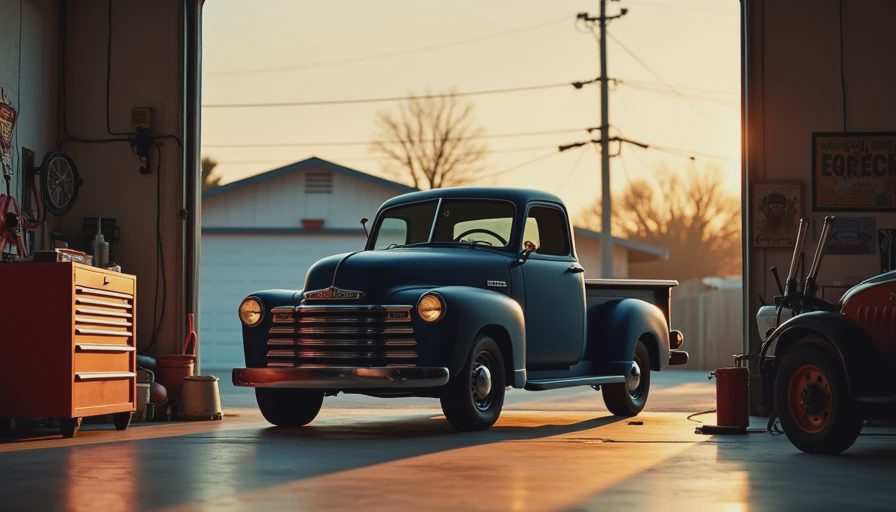
The garage matters as much as the truck. Classic trucks sitting outside take a beating from UV, moisture, and people who think a cracked vent window is an invitation. If you have a locked garage, a steering wheel lock, a battery tender, and a breathable cover, you are already ahead of most owners. Add a cheap GPS tracker and you have another layer of peace of mind for not much money.
Comprehensive coverage is the piece that handles theft, fire, hail, falling trees, and other bad luck that has nothing to do with your driving. Collision covers damage when the truck hits something or gets hit. Liability is the part you cannot skip if the truck goes on public roads, because it protects other people when you are at fault. If you only drive the truck a few thousand miles a year, tell the carrier that up front. Low mileage is one of the reasons collector policies often come in lower than standard daily-driver coverage.
Buying without buying somebody else’s headache
Before you hand over money, drive the truck long enough to get it hot. Listen for lifter noise, brake pull, drivetrain vibration, and cooling issues in traffic. Check the frame with a flashlight and your hand. Look under the carpet if the seller will let you. If the truck has recent paint and no photos of the metal work, ask why. A clean build story is worth money; a vague one usually costs money later.
For buyers who want help on the insurance side, get one quote from a collector specialist and one from a mainstream carrier. That comparison tells you fast whether the truck belongs in a hobby policy or a regular auto policy. If you are serious about classic trucks, the right coverage is part of the build, not an afterthought. Get the value right, keep the paperwork tight, and you will spend more time driving and less time arguing over a claim.