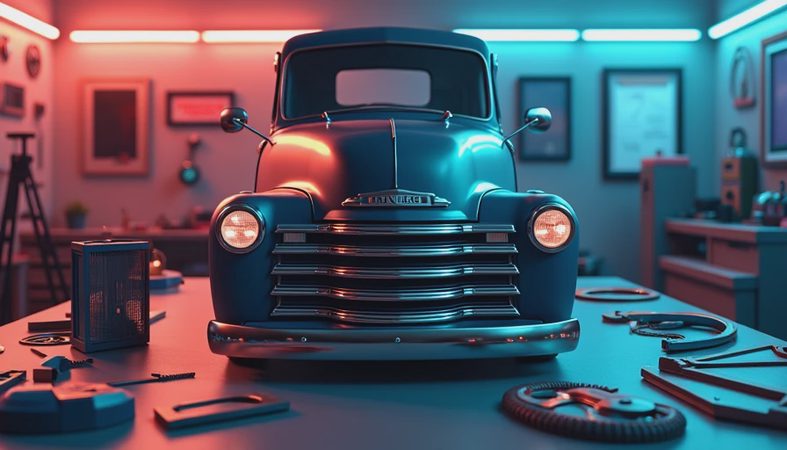
Finding early ford parts is less like online shopping and more like detective work with grease under your fingernails. The wrong bracket, distributor, or water pump can turn a Saturday repair into a month-long hunt. I have bought plenty of parts that looked right in a blurry listing and turned out to be wrong, worn out, or designed for a completely different year. That education cost me money, but it also taught me how to search smarter.
Whether you are restoring a Model T, Model A, 1932 Ford, or an early flathead V-8, the goal is not simply to find something that bolts on. You want the correct casting, usable condition, and a part that makes sense for the car’s history. Here is how I approach the hunt from the shop floor.
Start With the Ford’s Exact Identity
Before searching for early ford parts, write down the year, body style, engine, transmission, and whether the car is stock or modified. A 1930 Model A Tudor and a 1930 Model A pickup can share major mechanical pieces while using different body hardware, brackets, seats, and trim. Even production changes within one model year can matter.
Take clear photographs before removing anything. Photograph bolt locations, wire routing, casting numbers, and the way springs or clips sit. Measure shaft length, bolt spacing, pulley diameter, and thread size. A five-minute measurement can save you from buying a $75 part that costs another $40 to ship back.
The engine number is often more useful than a seller’s broad description. On early flatheads, heads, intake manifolds, distributors, and water pumps changed across applications. Record every number you can find, then compare it with a Ford parts book, a trusted restoration manual, or several clear photos from known restorations. One listing is not proof.

Know What Should Be Original
Original does not automatically mean better. A factory generator with a cracked housing is an interesting paperweight, not a reliable charging system. On the other hand, an original air cleaner, gauge cluster, radiator shell, or firewall bracket can add real value and save hours of fabrication. Decide which pieces matter to the car’s identity before spending restoration money.
For visible components, casting marks and small details tell the story. Look at fastener types, rib patterns, embossed lettering, drain plugs, and the shape of mounting ears. Reproduction early ford parts often work fine, but they can differ in finish, gauge thickness, or hardware. That difference might not matter on a driver, but it will matter on a serious restoration.
I usually divide a project into three piles: safety parts, operating parts, and appearance parts. Brake shoes, wheel cylinders, steering components, and tires belong in the first pile. Water pumps, ignition components, belts, and cooling parts belong in the second. Grilles, trim, handles, and gauges belong in the third. Spend your best money on safety and function before chasing perfect plating.
Where to Look Without Getting Burned
Swap meets are still excellent places to find early ford parts because you can handle the piece before paying. Bring a tape measure, small magnet, flashlight, thread gauge, and photographs of your project. A magnet helps distinguish steel from certain nonmagnetic metals, but it will not tell you whether a part is good. Inspect threads, mounting faces, cracks, and previous repairs.
Online marketplaces offer more selection, but listings require discipline. Ask for photos of every side, not just the cleanest angle. Request the casting number and exact measurements. If a seller says the part fits all Fords from 1928 through 1936, slow down. That kind of wording usually means the seller either does not know the difference or hopes you will not ask.
Specialty suppliers such as Mac’s Antique Auto Parts and Snyder’s Antique Auto Parts are useful for common Model A and Model T service items. Their catalog descriptions are generally easier to follow than random marketplace listings, and new reproduction parts can be the sensible choice for rubber, brake hydraulics, wiring, and wear items. For rare trim or unusual brackets, local clubs and restoration forums can be better than a general search engine.
Reproduction, Used, or Rebuilt?
The right source depends on the job. Buy new reproduction early ford parts when the original is a consumable or a safety concern. Brake hoses, wheel cylinders, radiator hoses, wiring harnesses, fuel line, and rubber mounts are poor places to prove your dedication to originality. Old rubber may look decent until it splits under heat or pressure.
Used original parts make more sense for hard-to-reproduce body hardware, early gauges, brackets, radiator shells, and trim. A used piece with surface rust can often be repaired. A reproduction with the wrong shape or mounting holes may never look right. Ask whether the part has been tested, rebuilt, or simply removed from a car decades ago. Those are three very different conditions.
Rebuilt generators, distributors, and carburetors deserve a closer look. A professional rebuild should include specific work such as bushings, seals, shaft inspection, and testing, not just a solvent bath and fresh paint. If you buy a rebuilt carburetor for $250 to $450, ask what was replaced and whether the throttle shaft was checked for air leakage. A shiny exterior does not make a carburetor run correctly.
Match the Part to the Job
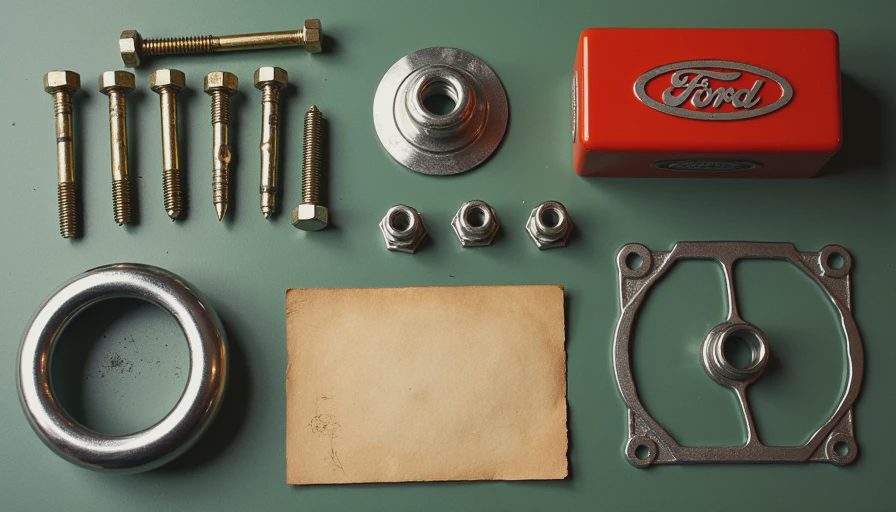
A common mistake is buying the cheapest early ford parts first and discovering that the project now contains three incompatible systems. Mixing a later distributor with an early ignition setup, using the wrong water pump spacing, or installing a modern alternator without planning the bracket and belt alignment creates trouble that looks like an engine problem.
Make a parts map before ordering. Write down the engine family, cooling system layout, generator or alternator choice, carburetor type, transmission, and rear axle. Then note which components must work together. For example, a flathead cooling conversion can affect hoses, thermostat placement, fan clearance, pulleys, and radiator selection. Changing one item often creates four smaller decisions.
Keep a box for removed hardware. Label bolts, spacers, clips, and shims in small bags, then write where each came from. Early Fords use plenty of hardware that looks interchangeable until the last inch of a restoration. A missing spacer can move a pulley out of line, while a slightly longer bolt can damage a water jacket or steering component.
A Practical Buying Checklist
When I inspect early ford parts, I start with condition rather than price. Check for cracks around mounting holes, stretched threads, warped flanges, broken ears, and corrosion deep enough to weaken the part. On rotating pieces, feel for excessive play and rough bearings. On electrical parts, inspect terminals and insulation before assuming a rebuild is needed.
Confirm the seller’s return policy, especially for expensive parts. A $30 bracket is one thing; a $600 radiator or rare transmission case is another. Save the listing, measurements, and photographs until the part is test-fitted. Do not clean away identifying marks before documenting them. Paint, plating, and even grime can hide evidence that helps match a component to the correct production period.
Budget realistically. A basic Model A brake refresh might use $200 to $500 in service parts, while a quality flathead cooling or ignition overhaul can run several hundred dollars more. Rare body trim, correct gauges, and good radiator shells can reach four figures. The cheapest listing is rarely the cheapest finished repair once shipping, machining, and replacement hardware enter the calculation.
Build the Car You Can Actually Drive
Restoration purists and practical drivers can agree on one thing: a Ford that cannot stop, steer, or stay cool is not finished. Use original parts where they preserve character, and use sensible reproductions where reliability matters. I would rather see a clean Model A with fresh brake hydraulics and a dependable wiring harness than a trailer queen hiding cracked hoses behind perfect paint.
Keep records of every part number, supplier, modification, and repair. The next owner will appreciate it, and six months from now you will appreciate it even more. Early ford parts are easier to find when you know what is already on the car and what you actually need.
Take your time, ask for measurements, and walk away from sellers who cannot answer basic questions. The right part usually shows up after a little patience. When it does, test-fit it before polishing, painting, or celebrating. That is how a pile of old steel becomes a running Ford instead of another unfinished project in the corner.