A ventilation fan garage setup is one of those upgrades you do not appreciate until you have worked in a closed shop with a running engine. The air gets thick, gasoline hangs around your nose, and an hour of grinding leaves your clothes smelling like exhaust. A decent fan will not turn a detached garage into a clean room, but the right setup can move fumes, reduce humidity, and make wrenching safer and more comfortable.
I have seen plenty of garages where the owner spent $1,500 on shiny cabinets but never gave the air a way out. That is backward. You can build a useful ventilation system for a few hundred dollars if you understand airflow, install it properly, and avoid fans that are only meant to move air around a living room.
Why Your Garage Needs Real Airflow
A box fan in an open window is better than nothing, but it is not the same as a ventilation fan garage system designed to exchange air. A box fan usually recirculates air unless another opening provides a clear intake path. It can also become a problem around fuel vapors because many household fans are not rated for hazardous locations.
The main jobs are straightforward. First, the fan should pull stale air and fumes out of the building. Second, fresh air needs to enter through a door, wall vent, or dedicated intake. Third, the exhaust needs to discharge outdoors, away from windows, doors, and neighboring work areas. If the incoming opening is too small, the fan gets noisy and weak. If the exhaust points beneath an eave, fumes can drift right back inside.
For normal maintenance, welding, painting, and short engine runs, moving the air out of the garage is usually more useful than blasting a fan directly at your face. Airflow should cross the work area instead of creating a swirling pocket beside the car.

Choosing the Right Fan and CFM
Fan capacity is listed in cubic feet per minute, or CFM. To estimate the minimum, multiply the garage's length, width, and ceiling height to get cubic feet, then choose a fan capable of several air changes per hour. A 24-by-24-foot garage with an 8-foot ceiling holds 4,608 cubic feet. A fan in the 1,000 to 1,500 CFM range can provide meaningful general ventilation when the intake opening is large enough.
Do not buy based on the biggest number printed on the box. Duct elbows, screens, louvers, and long runs reduce actual airflow. A wall-mounted exhaust fan from brands such as Dayton or Canarm is generally a more serious choice than a $25 clip-on fan. For a two-car garage, a 14- to 18-inch shutter-style exhaust fan is a practical starting point. Larger shops or frequent paint work need a designed exhaust system, not a guess from a hardware-store shelf.
Noise matters, too. A rattling fan becomes background noise you stop noticing, and that is when maintenance gets forgotten. Look for a guarded motor, replaceable parts, and a control switch located near the entry. A timer is useful when you want the fan to run for 20 or 30 minutes after shutting off a vehicle.
Installing a Ventilation Fan Garage Setup
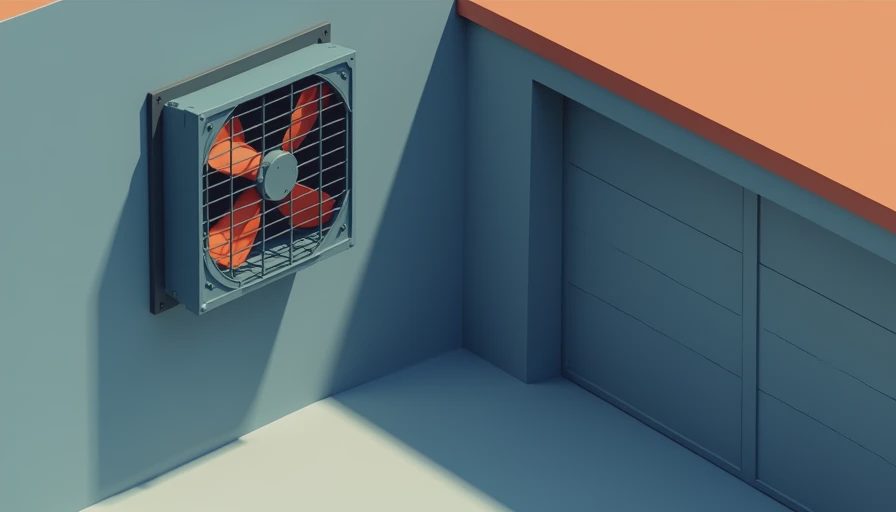
Mount the exhaust fan high on an exterior wall because warm, contaminated air rises. Keep it clear of shelving and the roof framing. A low-mounted fan can help with certain solvent vapors, but fuel vapor behavior varies, and ordinary electric motors are not automatically safe around flammable concentrations. If you regularly spray paint, use large quantities of solvent, or run engines indoors, follow local fire and electrical requirements and use equipment rated for that environment.
The intake side needs equal attention. Open the garage door several inches, install a louvered wall vent, or add a second screened opening on the opposite side of the room. A small crack under one door will not feed a high-CFM exhaust fan effectively. The ventilation fan garage layout works best when air enters low on one side, travels across the vehicle, and leaves high on the opposite side.
Have a licensed electrician handle permanent wiring if you are not comfortable with junction boxes, grounding, and circuit protection. Keep the switch away from fuel storage, and protect the cord or conduit from sharp sheet metal. Seal around the fan frame with exterior-grade caulk so rain does not find its way into the wall.
Exhaust Fumes, Welding Smoke, and Solvents
A ventilation fan is not a license to idle a car in a closed garage. Carbon monoxide is colorless and odorless, and a household carbon monoxide alarm is cheap insurance for any attached or detached garage near the home. The safest practice is to avoid indoor engine operation whenever possible. If a diagnostic run is unavoidable, use a properly fitted exhaust hose that vents outdoors, keep the main door open, and never leave the vehicle unattended.
Welding smoke and grinding dust need source capture when possible. A fan at the far end of the shop moves general air but may pull smoke across your breathing zone first. Position a movable extraction hood near the work and let the main exhaust handle the remaining haze. For bodywork, wear the right respirator for the product being used; ventilation does not replace respiratory protection.
Humidity, Rust, and Summer Heat
Good airflow helps with damp floors, wet cars, and condensation on tools. That matters if you keep an older Chevrolet, Ford truck, or motorcycle in the garage. Moisture trapped under a cover can start surface rust on bare steel surprisingly fast. Run the fan after washing a vehicle, but do not blow humid outdoor air inside during a muggy summer afternoon and expect the tools to dry.
For serious humidity control, combine ventilation with a dehumidifier and a sealed floor. A ventilation fan garage plan can lower the stale, damp feeling, while a dehumidifier handles moisture that ventilation alone cannot remove. In hot weather, use the exhaust fan early in the morning or after sunset, when the outside air is cooler. During the hottest part of the day, shade and insulation usually beat running a fan nonstop.
What I Would Buy for a Working Shop
For a typical two-car garage, I would spend roughly $150 to $400 on a guarded wall exhaust fan, a weatherproof louver, wiring, and a proper switch. I would add a second intake vent if the building is tight. A $30 floor fan still has a place for cooling your legs while you bleed brakes, but it should not be the entire ventilation fan garage strategy.
Skip decorative ceiling fans marketed for patios. They move air around the room but do not exchange it with the outdoors. Also skip unguarded fans near a busy workbench, especially if the blades are exposed to grinding sparks. The best setup is boring: sturdy housing, protected motor, clear airflow path, easy cleaning, and controls you will actually use.
Keeping the System Working
Clean the grille and blades every few months, especially if you grind, sand, or weld. Dust buildup cuts airflow and puts extra load on the motor. Check that the exterior louver opens freely and that insects have not packed the screen with debris. Listen for bearing noise, inspect the wiring, and test the switch before winter.
A ventilation fan garage upgrade will not fix every air-quality problem, but it solves a major one when installed with an intake path and sensible safety habits. Get the fumes moving outside, keep carbon monoxide protection in place, and do not confuse air circulation with exhaust. Your lungs, tools, and half-finished project will all be better off for it.