When somebody searches for auto fix car advice, they usually have a dead battery, a nasty noise, or a warning light staring back at them. I get it. A car that ran fine yesterday can turn into a two-ton paperweight before your coffee is cool. The trick is not throwing parts at the problem. It is finding out what failed, proving it, and then repairing the actual fault.
I have spent plenty of Sundays with my elbows over a fender and my knuckles against something sharp. Here is how I approach an auto fix car job, whether I am working on a 1972 Chevelle, a half-worn Silverado, or a newer sedan with more computers than mechanical sympathy.
Start with symptoms, not parts
Before grabbing a socket, write down exactly what the car is doing. Does it crank slowly, crank normally but fail to start, or start and die? Does the noise change when you turn the wheel? Does the temperature climb only at idle? These details narrow the search faster than an online shopping cart full of sensors.
For a no-start, separate the problem into three basics: fuel, spark, and compression. A gasoline engine needs the right amount of each at the right time. Listen for the fuel pump priming when the key turns on. Check for spark with an approved tester, not a screwdriver held near the plug wire. If the engine spins unusually fast, a compression or timing problem deserves attention.
A warning light also needs context. Pull diagnostic trouble codes with an OBD-II scanner, but do not treat the code as a command to replace that component. A P0301 code identifies a cylinder-one misfire; it does not prove the ignition coil is bad. Swap the coil with another cylinder, clear the code, and see whether the misfire follows it. That is diagnosis. Parts cannon work is how a $40 repair becomes a $400 afternoon.

The tools that actually earn their space
You do not need a professional tool truck parked in the driveway to auto fix car problems. Start with a decent metric and SAE socket set, combination wrenches, screwdrivers, pliers, a torque wrench, a test light, and a digital multimeter. Add a scan tool if the vehicle is from the last few decades. A basic scanner from Innova, Autel, or BlueDriver can pay for itself the first time it prevents a needless sensor purchase.
A test light is excellent for finding power at a fuse or connector, while a multimeter tells you voltage, resistance, and continuity. Learn the difference. Continuity with the circuit disconnected does not guarantee the component can carry current under load. For battery work, measure resting voltage after the car sits: roughly 12.6 volts indicates a charged twelve-volt battery, while a reading near 12.0 volts means it needs charging or testing.
Buy quality where safety is involved. Use jack stands on solid ground, chock the wheels, and never trust a hydraulic jack to hold a vehicle. A $35 pair of stands is cheap compared with a crushed rocker panel, or worse. Penetrating oil, brake cleaner, a headlamp, and a magnetic pickup tool also belong in the garage. They are not glamorous, but they save time.
Common repairs that are worth doing yourself
An auto fix car project is a good DIY candidate when the failure is accessible, the procedure is documented, and a mistake will not create an immediate safety hazard. Oil and filter changes, battery replacement, air filters, spark plugs, serpentine belts, and many brake jobs fit that description for an experienced home mechanic.
Brakes deserve special care. Measure pad thickness, inspect the rotor surface, and look for seized caliper slides or leaking hoses. Do not replace pads without cleaning and lubricating the correct slide points. If the pedal feels spongy after the job, the system may need bleeding. A soft pedal is not a character trait; it is a reason to stop driving until the hydraulic system is right.
Cooling-system work can also be manageable, but never open a hot radiator. A thermostat, upper hose, or radiator cap is usually straightforward. Overheating can also come from a failed water pump, restricted radiator, bad fan clutch, or combustion gases entering the coolant. If the coolant pushes out violently or the engine keeps overheating after simple repairs, get a pressure test before spending more money.
When the parts counter is the wrong move
I have watched capable owners auto fix car trouble into a much larger mess by replacing everything that looked suspicious. A new alternator will not repair a broken ground cable. A fuel pump will not cure an immobilizer problem. A throttle body will not fix a vacuum leak hiding under the intake.
Use a process. Confirm the complaint, inspect the obvious, test the circuit, isolate the failure, and only then order the part. Check connectors for green corrosion, harnesses for rubbed-through insulation, and grounds for looseness or rust. On older American iron, a bad engine ground can create charging, starting, gauge, and ignition problems at the same time.
Parts brands matter, but the most expensive box is not automatically the best one. Denso and NGK are strong choices for many ignition and sensor applications. AC Delco remains a sensible pick for a lot of GM platforms. For filters and wear items, reputable aftermarket brands are usually fine. Avoid mystery electrical parts with no meaningful warranty; saving $18 is not useful when the replacement fails next month.
The repairs that belong in a professional bay
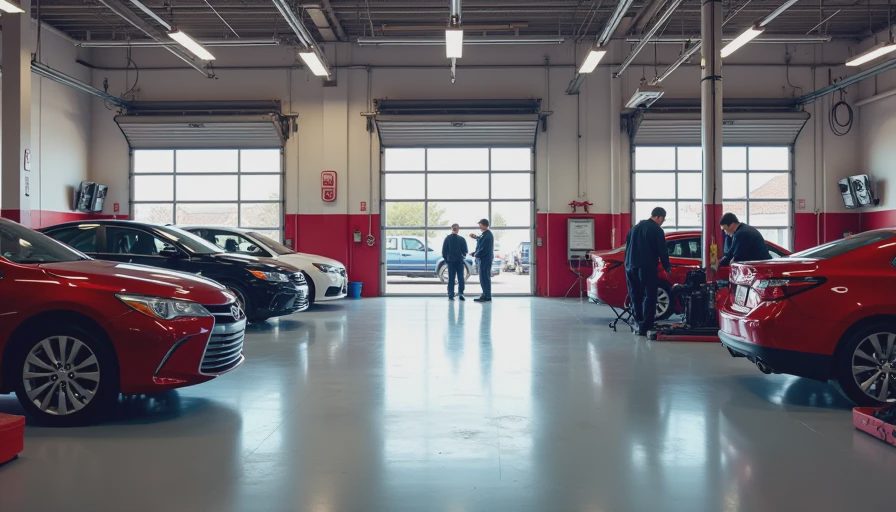
Some jobs are beyond a driveway, even if the internet makes them look simple. Air-conditioning systems require recovery equipment because refrigerant must not be vented. Transmission rebuilds need specialty tools, clean space, and accurate measurements. Advanced electrical faults can consume six hours before the repair even begins. That is not defeat; it is knowing where your time and equipment stop being enough.
A professional inspection is also smart for steering, suspension, and structural rust. Replacing a tie-rod end is doable, but the vehicle needs an alignment afterward. A cracked spring, loose ball joint, or rotten control-arm mount can make a car dangerous. If you are unsure, pay for diagnosis and ask the shop to show you the failed part. A fair mechanic should explain the test results instead of waving a tablet at you and naming a giant number.
Before approving work, ask for labor hours, parts brands, warranty terms, and whether shop supplies or diagnostic fees are included. A written estimate turns a vague auto fix car conversation into something you can compare. Independent shops often offer more direct communication than a dealership, while dealerships have better access to factory procedures and brand-specific scan equipment.
A garage checklist before the first wrench turns
The smartest auto fix car routine begins with five minutes of preparation. Park on level ground, gather the service information, photograph hose and wire routing, and place removed hardware in labeled containers. Take a second look before reconnecting the battery or starting the engine.
Keep a fire extinguisher rated for automotive use nearby. Disconnect the negative battery cable when working around starters, alternators, or exposed wiring, while remembering that some vehicles require radio codes or window initialization afterward. Wear eye protection when using compressed air or penetrating spray. Give exhaust components time to cool.
After the repair, inspect for leaks, loose tools, pinched wires, and missing fasteners. Start the engine and watch the gauges before taking a short, quiet test drive. Recheck fluid levels and scan for returning codes. That final inspection is where many rushed jobs reveal themselves.
The best auto fix car advice is simple: diagnose first, buy parts second, and respect the dangerous stuff. You do not need to know everything before starting. You need a method, decent tools, and the patience to test one thing at a time. That is how a dead car becomes a running car instead of an expensive pile of guesses.