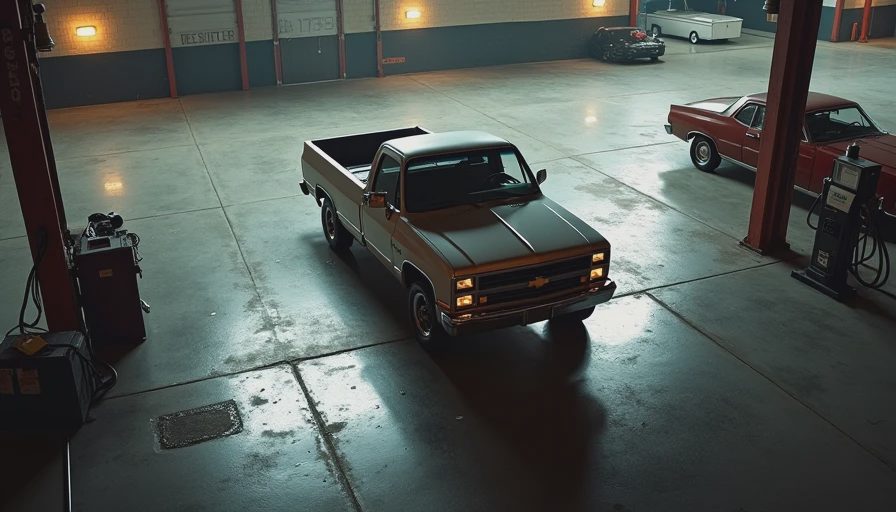
A square body Chevy is the kind of truck that gets remembered long after the paint dulls and the seats crack. It might be a survivor, a mild weekend cruiser, or a full-on LS-swapped build with more money in the drivetrain than the original sticker price. Either way, insurance is where a lot of owners get sideways. Treat it like a commuter and you can waste money. Treat it like a collectible and you can protect the real value instead of whatever some book says a rusty old pickup is worth.
The good news is that the market is not blind to these trucks anymore. Clean survivors, short-bed trucks, and well-documented builds have real demand. If you know how to present the truck, you can usually get better coverage, a fairer stated value, and fewer headaches if the worst happens.
Why the square body Chevy still matters
The square body Chevy runs from the 1973 to 1987 C/K era, and it hits a sweet spot for a lot of buyers: simple hardware, endless parts support, and enough style to stand out without trying too hard. A square body Chevy with decent sheet metal and the right stance can bring real money at auction or in a private sale, especially if it is a short bed, four-wheel drive, or an original trim package with clean options.
That matters to an insurer because these trucks do not fit the old beater-pickup stereotype anymore. A clean driver might be worth $12,000 to $20,000. A sharper 4x4 or a nicely built truck can climb much higher once you add paint, suspension, interior work, and engine upgrades. If you have put real cash into the truck, the policy needs to reflect that, not some generic value pulled off a used-car chart.
What insurers actually look at
When a carrier prices a truck like this, they care about use first. How many miles a year? Garage kept or sitting in the driveway? Daily driver or second vehicle? Those answers matter more than the badge on the grille. If your square body Chevy is garage kept, driven on weekends, and not used for commuting, classic-car coverage starts making a lot more sense than a plain old standard auto policy.
The next thing they look at is how the truck is built. Stock drum brakes, fresh factory 350, and original wheels are simple. Big cam, fuel injection swap, lift kit, custom paint, and expensive interior work are another story. Classic specialists like Hagerty and Grundy are built around agreed value coverage, while standard carriers like Progressive, GEICO, or State Farm may write it as a regular auto policy if the truck is used more like a normal vehicle. The important part is matching the policy to the actual truck, not the dream version in your head.

How to document value before you quote
When I price a square body Chevy for a customer, I want receipts, photos, and a clean story. Start with the basics: engine, transmission, axle, paint, tires, wheels, interior, and any rust repair. If you bought parts from LMC Truck, Brothers Trucks, Classic Industries, RockAuto, Summit Racing, or Speedway Motors, keep the invoices. Those little purchases stack up fast. A dash pad, seat cover, weatherstrip kit, and lighting refresh can swallow a grand without trying.
Then add the bigger stuff. A decent paint job can run $5,000 to $15,000. A crate engine or fuel-injection swap can push another few grand. If the truck has a documented build that really clears $25,000 or $30,000 invested, consider an appraisal or at least a detailed folder with dated pictures. That paperwork is what turns a claim from a guessing game into a straight number. Without it, you are asking an adjuster to believe a story they see every day.
Coverage setups that make sense
A lot of owners assume there is one right answer, but there are really three common setups. If the truck is rough, parked a lot, and still halfway through the build, liability-only can keep the cost down while you finish the project. That is cheap, but it leaves the truck exposed if it gets stolen, vandalized, or wiped out in your driveway.
If the truck is a real driver, liability plus comprehensive and collision is usually the safer middle ground. You get coverage for theft, fire, glass, weather damage, and a crash, and you can set the deductible where it makes sense. On a truck that sees decent mileage, I like seeing a deductible that does not tempt you to file tiny claims. For weekend use, classic policies often land in the $300 to $800 a year range, while a standard policy can run much higher depending on age, record, and location. A square body Chevy that only sees weekend miles is exactly the kind of truck where agreed value coverage earns its keep.
The mistakes that cost money later
The biggest mistake is underinsuring the truck to save a few bucks. I have seen owners set the value low because they did not want to pay another twenty or thirty dollars a year, then act shocked when the settlement comes back light. That is a bad trade. Another common miss is forgetting custom parts coverage. If the stereo, wheels, carb, or suspension is not listed somewhere, do not assume it is automatically covered at full replacement value.
People also let the paperwork get sloppy during a build. Parts get stacked in the corner, a hood gets bought on Marketplace, a seat gets recovered, and nobody saves the receipts. Six months later the truck gets hit, and now everyone is trying to reconstruct the story from memory. Do the boring part up front. Take photos, save invoices, and keep the VIN and title work clean. That small habit pays for itself the day you need it.
Final word before you shop quotes
If you are ready to insure a square body Chevy, call at least two classic specialists and one standard carrier before you sign anything. Ask about agreed value, mileage limits, storage rules, roadside assistance, custom equipment coverage, and whether the truck can be used for occasional errands or only pleasure driving. Write the answers down. The cheapest quote is not always the best deal if it leaves a clean truck priced like an old work mule.
The right policy should match the way you actually use the truck and what you really have in it. If the build is honest, documented, and cared for, protect it like the collectible it is. Then you can enjoy the drive without wondering what happens if a deer, a hailstorm, or a bad left turn ruins the day.