The garage door is the biggest moving object in your house. It weighs somewhere between 150 and 400 pounds depending on the material, cycles up and down roughly a thousand times a year, and gets almost zero attention from most homeowners until the morning it refuses to open and you're late for work.
I've rebuilt engines, rewired entire bays, and replaced floors, but the one repair that taught me genuine respect for stored energy was watching a torsion spring let go on an old door at a neighbor's house. The sound alone — a sharp metallic crack followed by the cable whipping through the track — was enough to convince me that some garage jobs belong to the pros. But plenty of door maintenance doesn't. Most of it is inspection, lubrication, and knowing what a problem sounds like before it becomes a breakdown.
The Door Is a System, Not a Slab
A garage door looks simple from the outside. A big rectangular panel that goes up and down. Inside the garage, it's a system of tracks, rollers, springs, cables, and an opener that all have to work together. When one part degrades, the whole system suffers. The door gets loud. It gets jerky. It hangs crooked in the opening. Those are warning signs, not personality quirks.
Tracks and Rollers — The Alignment That Drifts Over Time
The tracks are the steel rails mounted to the walls and ceiling that guide the door through its arc. Rollers — little wheels on bearings — ride inside the tracks. Over time, the tracks shift. Bolts loosen. A car bumper nudges a vertical track in the winter when everything's cold and brittle. Once a track is out of alignment, the rollers bind, the door shudders on the way up, and the opener motor works harder than it was designed to.
Inspect the tracks twice a year. Look at the gap between the roller and the track wall on both sides. If one side is tighter, loosen the mounting bolts, tap the track back into position, and retighten. It's a fifteen-minute job that prevents the kind of wear that turns a $12 roller replacement into a $400 track replacement.
Roller Materials Matter
Most doors come with steel rollers that have no bearings — just a steel shaft riding in a steel hinge. They're loud and they wear out the hinge holes over time. Nylon rollers with sealed ball bearings are quieter, last longer, and don't grind metal against metal. Swapping all the rollers on a standard two-car door costs about forty dollars and takes an hour. That's the single best upgrade you can do for door noise.
The Spring System That Can Kill You
Every garage door has a counterbalance system — either extension springs along the horizontal tracks or torsion springs mounted on a shaft above the door opening. Extension springs stretch. Torsion springs twist. Both store an enormous amount of energy. When they fail, they fail violently.
Why You Don't Touch Torsion Springs
A torsion spring is wound tight — seven to eight full turns on a typical residential door. When it breaks, it unwinds instantly with enough force to break bone. Adjusting or replacing torsion springs requires winding bars, the correct socket size, and an understanding of how many quarter-turns the spring needs based on the door weight and drum size. Get it wrong, and the door either won't lift or it'll fly open with no resistance.
I don't touch torsion springs myself beyond inspection. I call the guy who does doors for a living and has the right tools and the right insurance. If your door uses torsion springs and one breaks, close the door manually if you can, unplug the opener, and make the call. The service fee is cheaper than an emergency room visit.
Extension Springs — The Safety Cable Is Not Optional
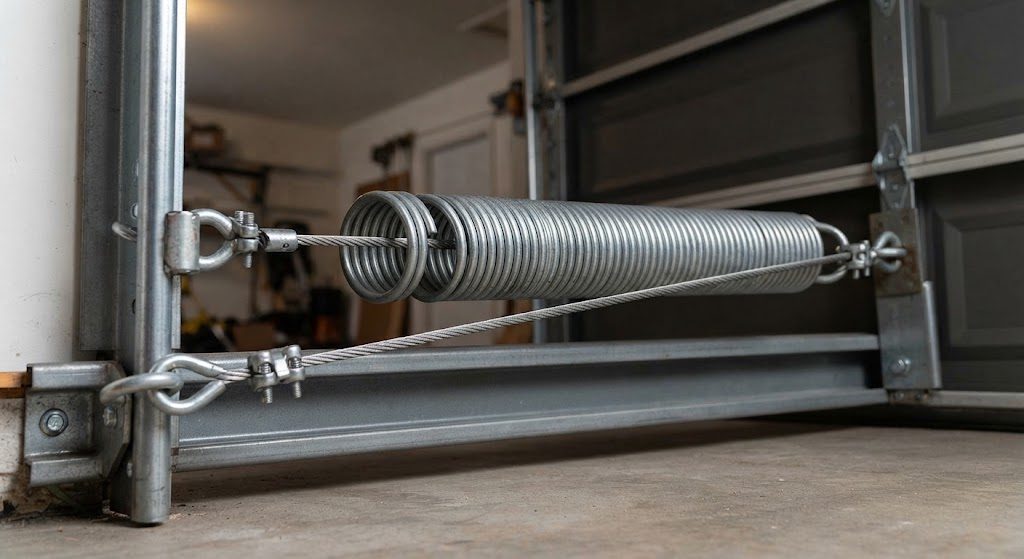
Extension springs run along the horizontal tracks and stretch when the door closes. The danger with these is that when they break, they turn into projectiles. Every extension spring should have a safety cable running through the center of the coil and anchored at both ends. If your door has extension springs and no safety cables, add them this weekend. The kit costs under twenty dollars.
The Opener — What It Can and Can't Do
The electric opener is a convenience device, not a lifting mechanism. Its job is to move a balanced door. If the door is heavy, binding, or out of adjustment, the opener will burn itself out trying to compensate. That's why you should be able to open the door manually with one hand — if you can't, the springs are wrong or something is binding, and the opener is working too hard.
The Auto-Reverse Test You Haven't Done Since Installation
Every opener manufactured after 1993 has an auto-reverse mechanism — an electric eye at the base of the door tracks that stops and reverses the door if the beam is broken. Test it monthly. Close the door and wave your foot through the beam. If the door doesn't reverse, clean the sensors and realign them until the indicator lights show a solid connection. If it still doesn't reverse, replace the sensors. This is the safety feature that keeps a 300-pound door from closing on a kid, a pet, or your own leg.
Lubrication — The Five-Minute Annual Ritual
Once a year, hit every moving part with the right lubricant. White lithium grease on the opener chain or screw drive. Silicone spray on the rollers, hinges, and springs — never WD-40, which is a solvent that strips existing lubricant and leaves parts dry. A well-lubricated door is quieter, smoother, and puts less strain on every component in the system. I do mine every November, right before the cold weather makes everything stiff.
A garage door that works perfectly is invisible. You don't think about it. You pull in, hit the button, and walk inside. That invisibility is earned — it comes from the inspection, lubrication, and small fixes that most people skip until the door stops moving on a Monday morning. Don't be that guy.