If your car has worn suspension components, you've probably felt it before you've diagnosed it. Maybe there's a clunk when you hit a bump, a pull to one side under braking, or a vibration in the wheel that comes and goes. These symptoms don't fix themselves. Left alone, they will eat your tires, wreck your alignment, and turn a cheap repair into a four-figure nightmare.
I've been a mechanic for over two decades, and I've seen drivers ignore suspension noises until something let go at 65 miles per hour. It's not pretty. This guide covers the most common worn suspension components, how to check them in your driveway, and what you should expect to pay to make it right.
What Are the Most Common Worn Suspension Components?
Your suspension system is made up of many wearing parts. The ones that fail most often are struts and shocks, ball joints, tie rod ends, control arm bushings, and sway bar links. All of these control how your tires grip the road and how well your steering responds.
Right now, worn suspension components in the front of the car get the most attention because that's where the steering is. Ball joints connect the control arm to the steering knuckle. When they wear, you get a clunk over bumps and a wandering feel on the highway. Tie rod ends connect the steering rack to the wheels. When they get loose, the car will pull to one side and eat the inside edge of the tire.
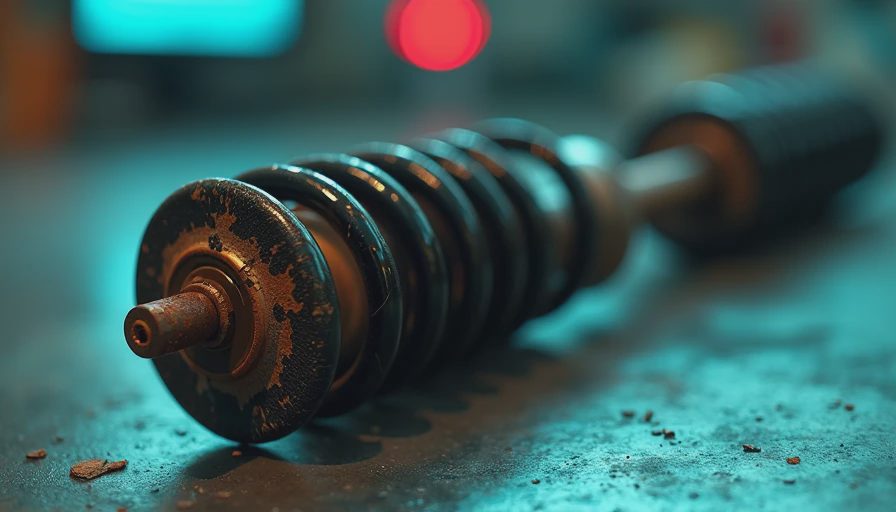
Shocks and struts are the parts that control spring movement. Once they lose their damping ability, the car bounces long after a bump. On most vehicles, factory shocks are pretty much done between 60,000 and 80,000 miles. If you're north of that, assume some of your suspension components are worn.
Why Worn Suspension Components Are a Safety Issue
A worn suspension component doesn't just make noise. It changes how the car behaves in an emergency. Braking distances get longer because the tire isn't planted on the road. Steering input gets sloppy, and you can end up correcting for the car's wander instead of focusing on traffic.
Here's the worst part: some parts can fail suddenly. A ball joint that has been knocking for months can separate with zero warning. I've had a customer's truck drop the front corner right in a parking lot. If that happens at speed, the results can be catastrophic. That's why I get grumpy when someone says they'll "wait until payday."
This stuff also destroys tires. An out-of-kilter control arm bushing will cause a perfectly good tire to wear down on the shoulder in 5,000 miles. A $150 alignment sounds expensive until you're buying a new set of tires every season.
How to Check Your Suspension in the Driveway
You don't need a lift to find most of these problems. You need a jack, jack stands, and a pry bar. Here's the routine I run on every car in my shop.
Push down on each corner with the car parked. If it bounces more than one and a half times, the shock or strut is weak. Then get the car on stands, grab the wheel at 9 and 3, and push in and out. Any play means tie rod wear. Grab at 12 and 6 and rock it. Play here means ball joints or wheel bearings are loose.
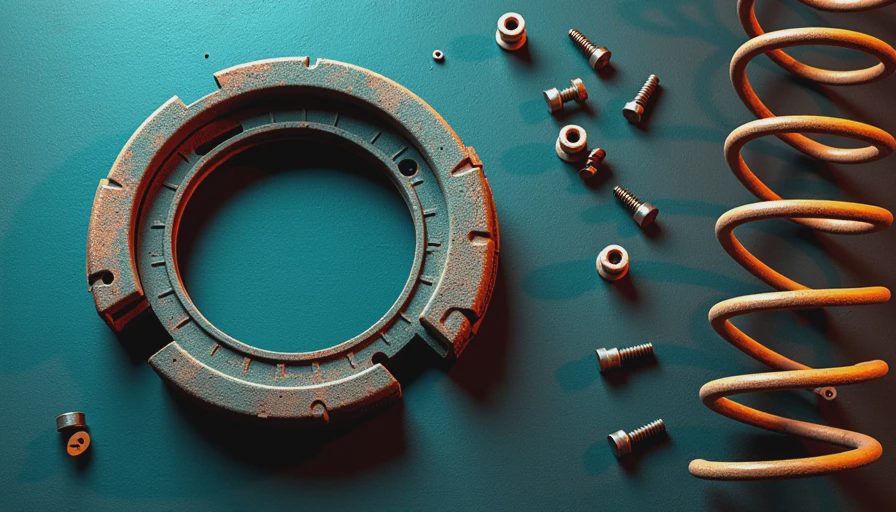
Take the wheel off and inspect the rubber bushings. If you see cracking, separation, or missing chunks, the bushing is done. Also check the shock body for oil streaks, which is a sign of a blown seal. These simple checks will catch 90 percent of the suspension issues I see every week.
What It Costs to Fix Worn Suspension Components
Let's talk money. A pair of front quick-struts for a Honda Civic runs $200 to $400 in parts. A full-size truck will be more like $500 to $700 for a pair. If you install them yourself, that's your total bill. At a shop, expect an hour and a half of labor per side plus an alignment. For a pair, that's often $800 to $1,200 out the door.
Ball joints and tie rod ends are cheaper. A quality ball joint is $30 to $80. Tie rod ends are in the same range. Labor is usually two hours or less, so a front-end repair with parts, labor, and alignment might be $400 to $600. Sway bar links are the cheapest job of all, with parts around $20 and a 15-minute install.
The key point is that worn suspension components only get worse. What starts as a $200 bushing eventually becomes a $900 control arm and an alignment. Fix it early, buy good parts, and you'll only pay once.
Here's my honest take: if you've got any of the warning signs we talked about, set aside a Saturday and go through the checklist. You might find one bad bushing or discover the whole corner needs work. Either way, it's cheaper than the alternative.
Give your car a good listen on your next drive. If you hear a clunk or feel a wobble, don't blame the road. Blame the parts that hold your car together.