If you've ever wondered what your car suspension actually does, you're not alone. Most drivers know tires matter, but the suspension is what keeps them planted on the pavement. I've been under enough cars to tell you straight: a neglected suspension will chew up tires, wear out brakes, and make a 30-minute commute feel like a rodeo. And the longer you ignore it, the more it costs. Here's what I've learned after 25 years in the shop.
What Does Your Car Suspension Actually Do?
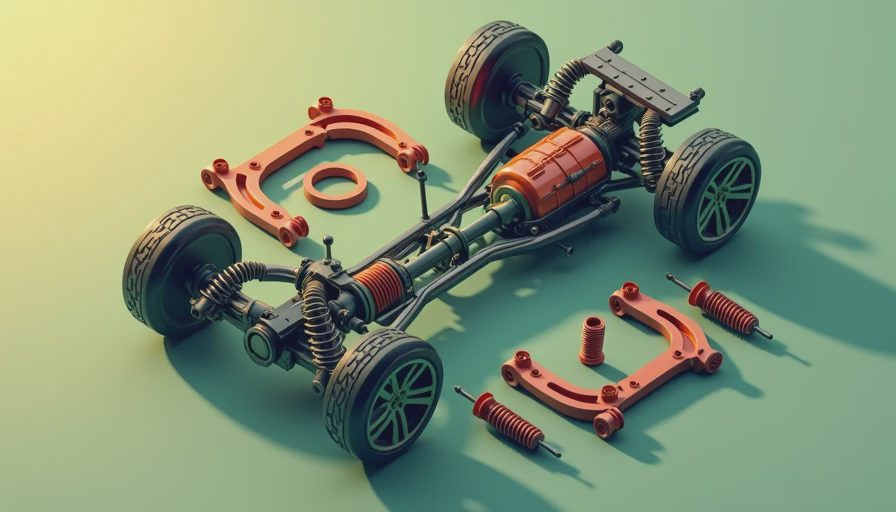
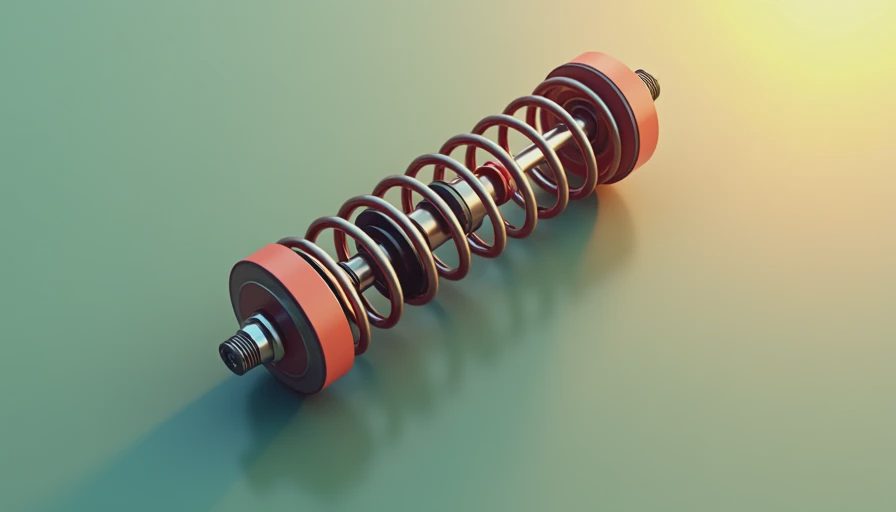
Your car suspension does three jobs: it absorbs bumps, keeps the tires in contact with the road, and controls body roll. The springs handle the bumps, the shocks or struts dampen the bounce, and the control arms tie it all together. If any one of those parts is worn, the whole system starts to fight itself. That's when you hear clunks, feel vibrations, and watch your tire wear go sideways.
A lot of folks think a car suspension is just shocks and struts. It's not. It's bushings, ball joints, sway bar links, control arms, and the knuckles and brackets holding them. On an older car, all that rubber and steel gets tired. On a modern car, some of it is sealed and meant to last. But nothing lasts forever.
Here's the thing: if you let the suspension go, the rest of the car pays. Worn shocks mean the spring bounces uncontrolled, so the tire comes off the pavement mid-bump. That kills your grip, your braking distance, and your alignment. I've seen tires that lasted 20,000 miles because someone ignored a clunk for two years.
Signs Your Car Suspension Is Going Bad
A good car suspension goes bad slowly. You notice the nose dove under braking, or the rear squats when you hit the gas. The car wanders on the highway like it's looking for a parking spot. You hear a metallic clunk every time you roll over a seam. When you hit a bump, the car keeps moving after the bump is gone—that's your shocks telling you they're done.
Check your tires. Uneven wear is the giveaway. If the inside edge is worn thin, that's an alignment or suspension issue. If the tire looks scalloped or cupped, that's a shock/strut issue. A new set of tires won't cure a worn suspension—it'll just make the new tires wear the same way.
How Much Does a Car Suspension Rebuild Cost?
If you're asking what a car suspension costs to fix, it depends how far you want to go. A quick fix—sway bar links and a set of quality shocks—can run $300 to $600 in parts if you do it yourself. Buy cheap, and you'll be back in six months. I run KYB and Bilstein on most of my customers' cars. A full set of Bilstein shocks for a half-ton truck will set you back around $700. KYB is a solid budget pick at half that.
Labor is the other half. At a shop, expect $100 to $150 an hour. A typical strut job on a front-wheel-drive car runs two to three hours per side. You can do the math: a front strut replacement will land between $600 and $1,000. A full rebuild with control arms, bushings, and ball joints can easily hit $2,500 on a European car. Decide what you want before you get surprised.
How to Check Your Car Suspension in 10 Minutes
You don't need a lift to get a feel for a car suspension. Park on flat ground, push down hard on one corner of the car, and let go. If it bounces more than once and a half, the shock or strut is weak. Do it on all four corners. Then get under the car with a flashlight and look for oil drips on the shocks, cracked bushings, and rusted brake lines.
If you want to get deeper, jack up the front. Grab the tire at 12 and 6 o'clock and rock it. Play there points to a wheel bearing. Grab at 9 and 3—that's tie rod play. Look at the sway bar links for torn boots. A few minutes here can keep a small issue from becoming a $1,500 repair.
When to Fix vs Replace
Some shops will tell you to replace the whole car suspension when you only need a pair of end links. That's lazy. If the car is otherwise solid, fix what's worn in pairs. Shocks and struts should be replaced axle-by-axle—don't do one side and leave the other. But if you own a 15-year-old truck with 180,000 miles and every mount is cracked, a full refresh might actually make sense. It can turn a clapped-out ride into a daily driver again.
Know when to stop. If the frame is rusty or the engine is tired, pouring $2,000 into suspension is throwing good money after bad. But if the body's clean and the drivetrain is sound, a new car suspension can make it feel like a completely different vehicle.
So here's my straight advice: don't wait for the car to fail you. Spend 10 minutes doing the bounce test. If you're not sure what you're looking at, ask a friend who's got a floor jack or give us a call. A car suspension is the one system that makes every other system work better. Ignore it, and you'll pay for it in tires, brakes, and headaches. Fix it, and you'll wonder why you waited.