I've got a customer with a 2004 Silverado who swore the front end was shaking itself apart. Every bump on I-94 sent a clunk up through the steering column. The tie rod end on the passenger side had more play than a high school kid's excuse for missing curfew. Thirty minutes and a $45 part later, the truck drove like it was off the showroom floor. If you own anything with a steering rack and wheels, understanding this part is one of those skills that'll save you money and maybe a tow truck call.
What the Tie Rod End Actually Does
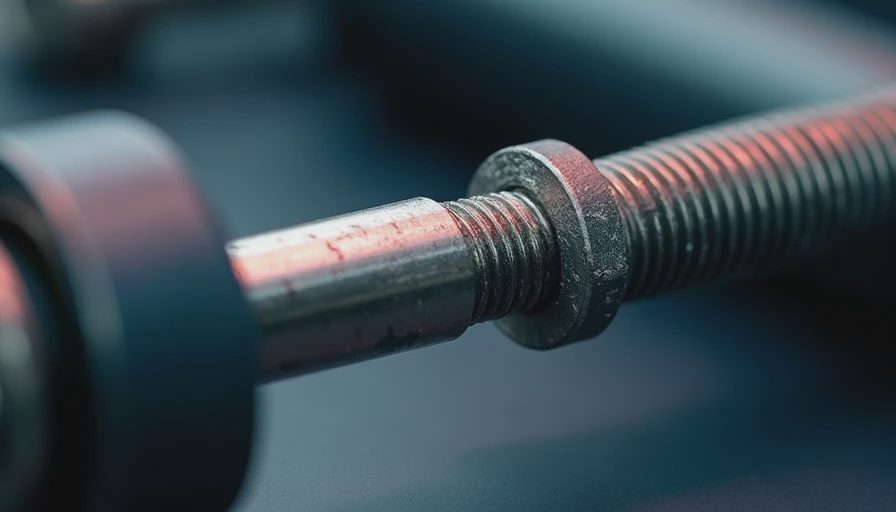
The tie rod end is the pivot point between your steering rack and the steering knuckle on each front wheel. Every time you turn the wheel, the rack pushes or pulls the tie rod, which swings the knuckle and points the tire. There's an inner joint where the rod meets the rack and an outer joint at the steering knuckle. On many trucks and older rear-wheel-drive cars you'll find a center link with tie rod ends on both sides. The joint itself is a steel ball seated in a socket, sealed with a rubber boot and packed with grease. It's designed to move in every direction while still transferring straight-line force. Simple piece of engineering, which is why it's so easy to ignore until it quits.
That joint takes a pounding. Every pothole, every expansion joint, every driveway apron you hit sends force through that little ball-and-socket. When the boot tears and the grease dries out, metal starts grinding on metal. That's when the clunking starts. It might feel like a minor annoyance, but it's the first domino in a chain that ends with a tow truck.
How to Tell When a Tie Rod End Is Going Bad
Most worn tie rod ends don't fail all at once. They throw warnings. The first thing I notice is a clunk or knock when I hit a bump or make a slow turn. Grab the tire at nine and three and rock it back and forth. If you feel play, the joint is loose. You might also notice more slack in the steering wheel, that dead zone in the center before the tires respond. Uneven tire wear is another clue, especially if the inside edge of one front tire is scrubbing faster than the rest. And if the rubber boot is torn, grease is out and dirt is in. That tie rod end needs replacing, not next season.
Why You Shouldn't Put Off a Worn Tie Rod End
Here's the thing about a loose tie rod end: it doesn't just make noise. When the ball and socket wear enough, the joint can separate completely. I've seen it happen on a '97 F-150 coming out of a parking lot. The wheel folded under the fender and the driver was lucky it happened at five miles an hour instead of seventy. In forty years of driving, you might never see that failure. But it only takes one pothole at the wrong angle. The other cost is the tires. When the joint is loose, the wheel toes in and out, dragging the edge of that tire across the asphalt. Run that for a summer and you'll kill a $150 tire. A replacement joint runs around $40 to $80 for a quality aftermarket part, and the alignment to reset toe afterward will set you back another $90 or so. That's a lot cheaper than a fender, a tire, or a tow. I've also seen tie rod ends go 200,000 miles on a commuter car and fail in under 40,000 on a work truck that lives on gravel. Roads and maintenance decide the lifespan. But once there's play, you're on borrowed time.
Tie Rod End Replacement Cost: Shop vs. Your Garage
At the shop, I typically quote a customer around $200 to $350 for one side, including the part, an hour of labor, and a four-wheel alignment. You can do the same job at home for under a hundred if you already own basic hand tools, a jack, and stands. The parts will be half the price if you buy them online, and you're not paying shop labor. The catch is that you need to count on alignment. You can't set toe by eye and expect the tires to last. So factor in $80 to $120 for an alignment at a local shop, unless you've got a driveway trick that works.
How to Replace a Tie Rod End in Your Own Garage
This job is a Saturday morning project. First, loosen the lug nuts on the front wheel, jack up the truck, and set it on jack stands. Remove the wheel. Then soak the stud threads and the castle nut in penetrating oil. Use a ball joint separator or a pickle fork to pop the tapered stud out of the steering knuckle. A pickle fork will tear the boot, so if you want to reuse the joint, use a ball joint separator. Once the stud is free, count the number of turns it takes to get the old part off the inner tie rod or center link. That count tells you roughly where to thread the new one on so toe is close. Then swap in the new part. Use thread locker and torque the castle nut to spec, then install a new cotter pin. Reinstall the wheel and get the car down. Your toe setting won't be perfect, so drive it to an alignment shop and let the machine do the final word. That's the full job. For a first-timer, figure two hours with the right tools. A ball joint separator costs about $25 at any parts store and is worth owning if you plan to keep your car a while.