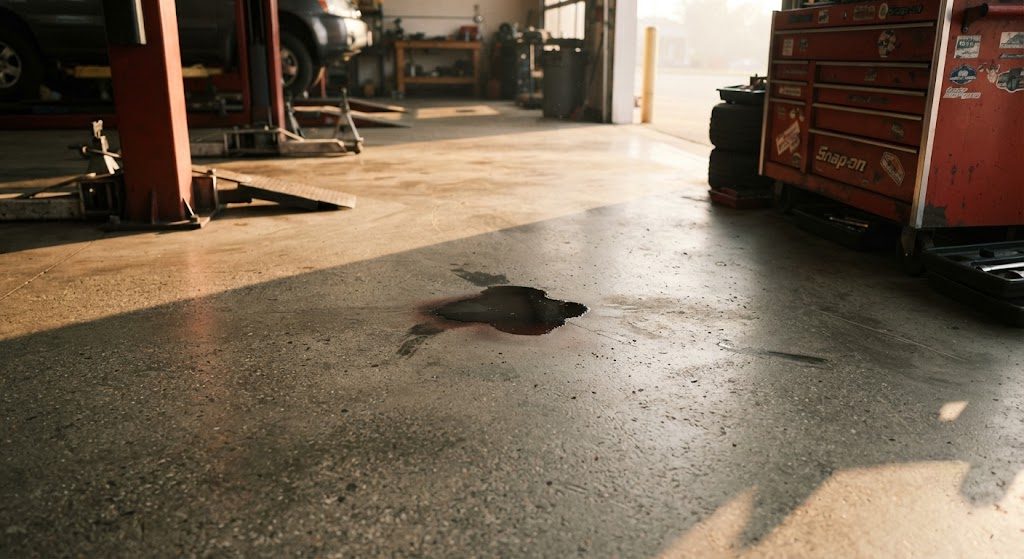
The first time I spilled brake fluid on a brand-new epoxy floor, I watched the clear coat turn cloudy in about thirty seconds. It was a friend's garage, not mine — he'd just finished the floor that weekend, two coats of epoxy with color flakes and a glossy topcoat. Looked incredible. I was over there helping him swap a master cylinder on his Camaro, and a single drip from the hard line hit the floor before I could catch it.
That cloudy spot never went away. He tried cleaning it. He tried polishing it. The brake fluid had eaten into the clear and there was no fixing it. Every time he opened the garage door after that, the spot caught the light and reminded him that beautiful floors and actual work don't always mix.
That was fifteen years ago. Since then I've put floors through worse — my own shop, my home garage, and half a dozen buddy projects. What I've learned is simple: the best garage floor is the one you don't have to think about.
What I've Tried and What Survived
Every floor material has a sales pitch. The epoxy guy will tell you it's bulletproof. The tile guy will tell you it lasts forever. The concrete guy will tell you to leave it bare and stop worrying. They're all partly right and partly full of it. What matters is what actually happens after five years of jack stands, dropped wrenches, and brake fluid.
Bare Concrete — Honest but Punishing
My first home garage was bare concrete, and I worked on that floor for eight years. The good: it's cheap — the floor was already there when I moved in. It doesn't peel or delaminate. It doesn't care what you spill on it. The bad: it stains instantly and permanently. Every oil change leaves a dark spot that never comes out. Brake fluid soaks into the surface and leaves a ghost stain you can feel but not see until the light hits it wrong. And bare concrete creates dust — fine gray powder that coats your tools, your lungs, and anything you leave on a lower shelf.
I wore knee pads every time I worked on that floor, not for comfort but because bare concrete chews through denim in about six months. If you're on a tight budget, bare concrete works. But don't pretend it's a long-term solution. It's the floor you have until you can afford the floor you want.
Epoxy — Beautiful Until It Isn't
When I opened Callahan Auto Works in 2016, I had the three bays done in a professional-grade epoxy. Two coats of base, full broadcast of color flakes, and a UV-stable clear coat on top. It looked incredible for about two years.
Here's what the brochures don't tell you: brake fluid is an epoxy solvent. Not immediately — a quick wipe won't hurt a good clear coat. But if you let it sit, it clouds the clear, then softens the color layer underneath. Hot tires lift it at the edges. Welding slag burns pinholes through to the concrete. And if moisture was in the slab when they applied it — which happens more often than installers admit — the epoxy delaminates in sheets that you'll find under your tool chest six months later.
Leo Chase did an epoxy floor in his home garage around the same time. By year three, the area under his engine bay was peeling back in a two-foot circle. He ended up grinding the whole thing off and starting over. Epoxy is the right choice for a garage that sees light use — weekend parking, the occasional oil change, a clean place to store a classic you don't work on. For a working shop or a serious home garage, it's a countdown until you're disappointed.
Sealed Concrete — The Compromise I Landed On
My shop floor today is sealed concrete. Not polished, not coated. Just a penetrating sealer that soaks into the concrete and hardens the surface without building a film on top. It's the same stuff used in warehouse floors and commercial kitchens.
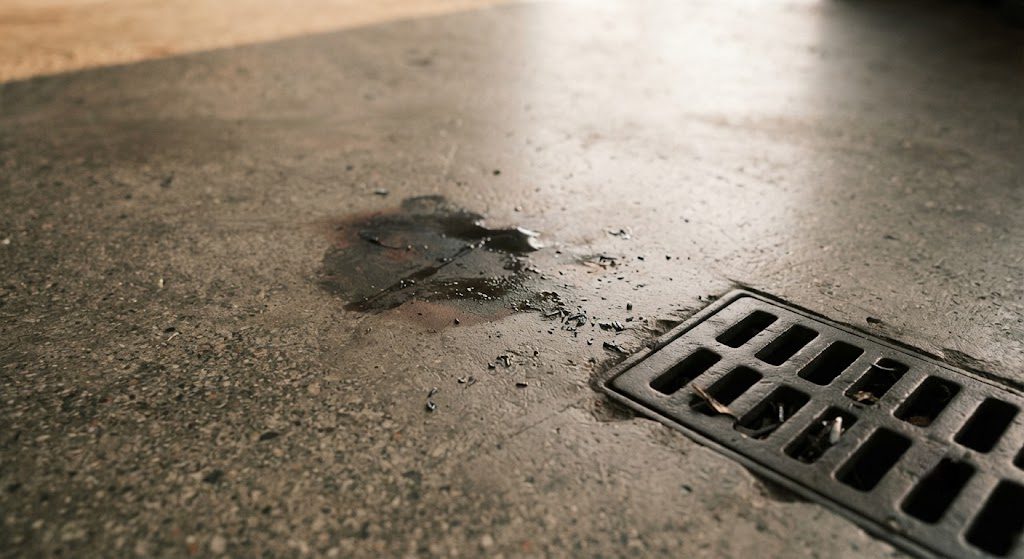
Sealed concrete doesn't peel because there's nothing to peel. It doesn't cloud from brake fluid because the sealant is in the concrete, not on it. It still stains — nothing stops oil from leaving a mark — but the stains don't spread and they don't get worse over time. When it starts looking rough after a few years, I roll on another coat of sealer over a weekend and keep going.
The tradeoff is aesthetics. Sealed concrete looks like concrete. It's not shiny. It doesn't photograph well for Instagram. It just works. For a working garage, that's exactly what you want.
Tile — The Dark Horse Option
I haven't personally owned a tile garage floor, but I've worked in a shop that had it — a high-end restoration place where the owner did European exotics and wanted a floor that matched the cars. Porcelain tile, full-body color so chips don't show through, epoxy grout.
That floor survived everything. Brake fluid, gasoline, dropped calipers, hot exhaust pipes. The grout stained a little over time, but the tiles themselves were indestructible. The only downside is cost — materials and labor run three to five times what epoxy costs — and the fact that standing on tile for eight hours is harder on your knees and back than concrete. If you've got the budget and you don't do marathon work sessions, tile is the closest thing to a permanent floor you can get.
What I Recommend Based on How You Use Your Garage
If your garage is primarily parking and storage with occasional light work — oil changes, brake pads, maybe a weekend detail — epoxy will make you happy. Go with a professional installer, make sure they test the slab moisture before they start, and accept that it'll need attention eventually.
If your garage is a working space — project cars, fabrication, fluids that spill faster than you can catch them — go with sealed concrete. It's the floor you'll curse the least. I sealed mine in 2018 and haven't thought about it since, which is exactly what I want from a floor.
If you're building your dream garage and budget isn't the constraint, consider tile. But know that a tile floor will outlast every car you own and probably the building itself. That's either a feature or a warning, depending on how you look at it.
The floor sets the tone for the whole garage. Make it honest. Make it durable. And whatever you do, don't let brake fluid sit on it.