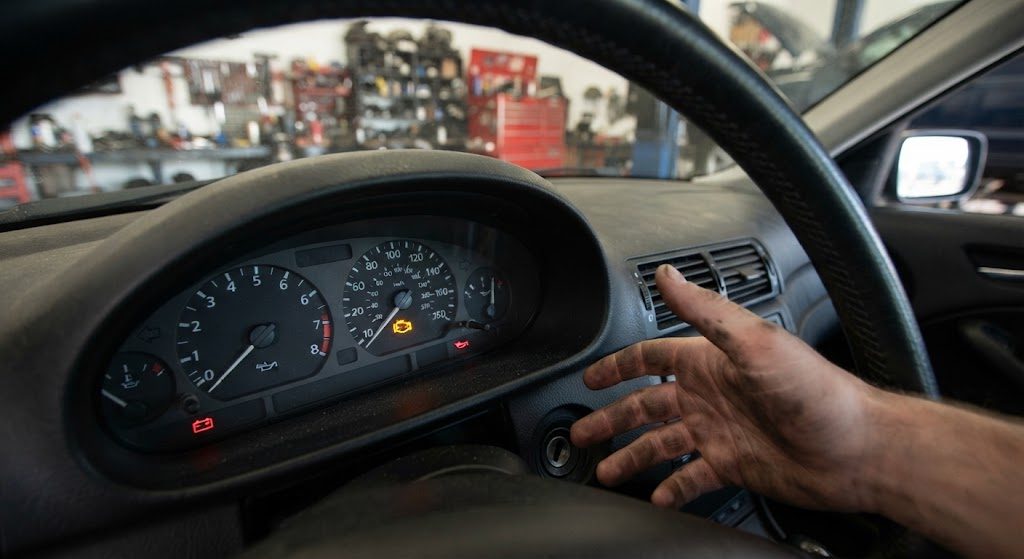
Last Tuesday a guy pulled into Bay One in a 2018 Equinox, white-knuckling the steering wheel like the thing was about to catch fire. The check engine light had come on halfway to work. He'd already called his wife. He'd already priced a worst-case repair in his head.
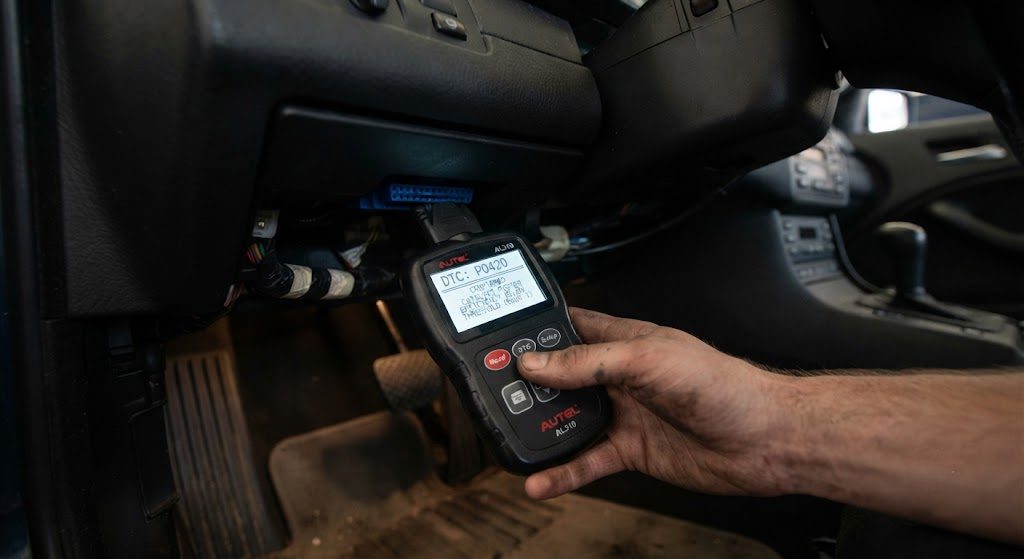
I plugged in the scanner. P0456. Small EVAP leak.
"You know what that code usually means?" I asked.
He shook his head, bracing for bad news.
"Your gas cap wasn't clicked down all the way."
I cleared the code, tightened the cap, and sent him on his way. No charge. He looked like I'd just told him he won the lottery.
That happens at least twice a week in this shop. The check engine light comes on, and people assume the worst. And I get it — that little amber glow looks expensive. But here's the truth: most of the codes I see are the car complaining about something minor. The trick is knowing which ones to take seriously.
The Five Codes That Lie to You Every Week
If you drive a modern car, your check engine light has probably been triggered by one of these five codes at some point. I see them so often I could diagnose them from across the parking lot.
The first is P0420 — catalytic converter efficiency below threshold. Sounds terrifying. Most of the time it's not the converter itself but a lazy downstream oxygen sensor that's slow to respond. A $60 sensor gets replaced instead of a $1,200 converter, and the code stays gone. Yet plenty of shops will sell you the converter first and ask questions later.
Next is P0171 and P0174 — system too lean, bank one and two. These codes send people straight to Google, where they learn about fuel pumps and injectors and really scare themselves. In reality, these are usually vacuum leaks. A cracked PCV hose, a split intake boot, a dried-out gasket. The fix costs pennies, but only if you diagnose it right.
P0300 — random misfire — also makes the list. It sounds like your engine is eating itself, but I've solved more P0300s with a new set of spark plugs than with any major engine work. Modern plug intervals get stretched past what they should, and the coil packs get tired. Swap the plugs, clear the code, and suddenly the "catastrophic misfire" is gone.
Then there's P0456, the EVAP leak I already mentioned, and P0128 — coolant thermostat rationality. That last one just means your thermostat is stuck open and the engine isn't warming up fast enough. Annoying, not dangerous. Replace the thermostat and move on.
None of these require pulling over on the shoulder. Most don't even require same-day attention.
The One Code You Never Ignore
If you see a flashing check engine light — not solid, but flashing — pull over and shut the engine off. I don't care if you're five minutes from home.
A flashing light means a severe misfire that's dumping raw fuel into the catalytic converter. That fuel ignites inside the converter and melts the ceramic substrate into a solid brick. Keep driving, and a problem that started as a $30 spark plug turns into a $1,500 converter replacement. I've seen it happen more times than I can count, usually to people who thought they could "just make it to the shop."
The same goes for any code paired with oil pressure warnings, overheating, or a noise that makes you wince. The check engine light is a messenger. It's telling you something changed. Whether that something is a loose gas cap or a piston about to exit through the hood — that's what the diagnosis is for.
And if you don't own a scanner, buy one. A basic $30 unit reads and clears codes. It won't do bidirectional control or live data graphing, but it'll tell you what the car is trying to say. That's more than the dash light does on its own.
The check engine light isn't your enemy. Treating every code like a crisis — that's the problem.