If you are shopping for a project truck, planning a trailer, or trying to get an old Ford through the garage door, the 1972 ford f250 2door dimensions matter more than a shiny auction photo. These bump-side trucks came with different wheelbases, beds, axles, and suspension packages, so there is no single measurement that fits every regular-cab F-250. The numbers below give you a useful starting point, then I will show you where the tape measure needs to settle the argument.
The basic size of a 1972 F-250 regular cab
The two-door cab is Ford's regular cab, with one front bench seat and doors on each side. Depending on bed and chassis configuration, a 1972 F-250 commonly falls around 79 to 80 inches wide at the body, without counting mirrors. Overall height is usually in the neighborhood of 72 to 74 inches with stock tires and suspension. A truck that has sagging rear springs can sit lower, while a four-wheel-drive conversion, lift kit, or taller radial tire can add several inches.
For length, short-bed regular-cab trucks are often close to 195 inches from bumper to bumper. Long-bed examples are generally around 210 to 218 inches, depending on the bumper, hitch, and exact wheelbase. Those figures explain why one F-250 can fit in a compact garage while another leaves the tailgate practically in the driveway.
The 1972 ford f250 2door dimensions are best treated as a range, not a promise stamped in stone. Ford offered different frame lengths, and decades of replacement bumpers and homemade bodywork have made many surviving trucks slightly different from how they left the factory.
Wheelbase and bed length are the big variables
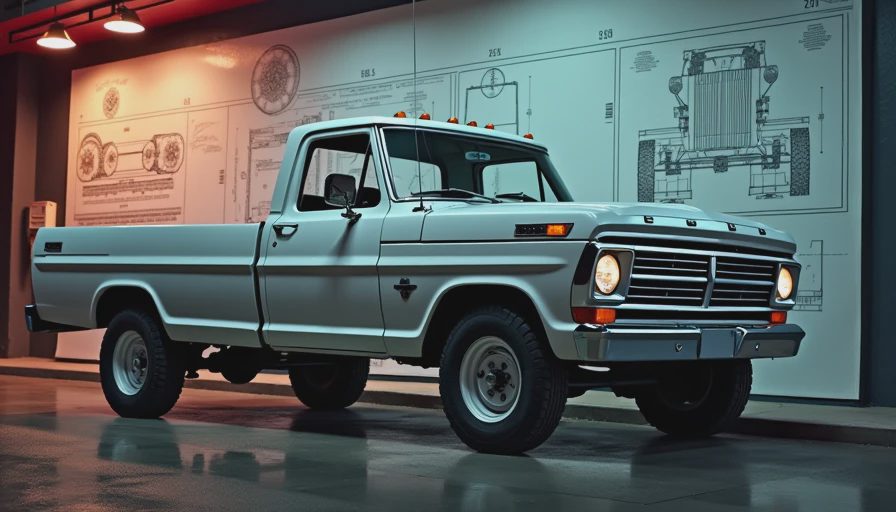
Wheelbase is the distance from the center of the front axle to the center of the rear axle. On a regular-cab F-250, common configurations are roughly in the 131-inch range for a shorter long-bed chassis, with longer chassis versions reaching approximately 149 inches. The exact number depends on whether you are looking at a standard pickup box, a camper-oriented chassis, or a truck modified for another body.
A short box is not as common on every F-250 configuration as it is on an F-100, so do not assume a short-looking truck is factory-correct. Measure from the back of the cab to the end of the bed, then compare the frame and axle position. A typical pickup bed is about 78 inches long inside for a long-bed version, while shorter beds can be closer to 66 inches. Ford bed swaps are common, especially after fifty years of rust repair.
When comparing 1972 ford f250 2door dimensions, write down both wheelbase and box length. They tell you more about how the truck will park, tow, and handle than the model badge does.
Width, mirrors, and garage clearance
The body width of a stock 1972 F-250 is generally about 79.5 inches at the widest sheet metal. That is the number people usually quote, but it is not the number you should use when measuring a garage. Add the mirrors, which can push the practical width past 84 inches depending on the mirror arms and whether aftermarket towing mirrors are installed.
For a comfortable garage fit, I want at least 30 inches of working room on the driver side and enough space to open the hood without hitting a wall or shelving. A 96-inch garage door can technically accept a truck around 80 inches wide, but lining up a long-bed Ford through that opening is not the same as having room to work. Measure the opening at its narrowest point, including weather stripping and trim. Then measure the truck with mirrors in their normal driving position.
The 1972 ford f250 2door dimensions also affect trailer selection. A narrow utility trailer may carry the truck, but the fenders can interfere with the tires. Check deck width, ramp width, axle rating, and tie-down points before handing over a deposit.
Height, stance, and tire changes
Stock height is difficult to pin down because these trucks are old enough to have worn springs, replacement shocks, different tire sizes, and frame repairs. A two-wheel-drive F-250 with original-style tires may measure about 72 inches at the roof. Four-wheel-drive trucks sit higher, and a set of 33-inch tires can add more than an inch compared with a smaller stock-size tire. A two-inch lift changes the real-world number even more.
Do not measure height at the hood or roof from a sloped driveway. Park on flat concrete, inflate the tires evenly, and measure from the floor to the highest fixed point. Include cab-marker lights, if fitted, and remember that an open tailgate changes the truck's parking envelope even though it does not change the roof height.
If the truck is going into a 7-foot garage, measure twice. Seven feet is 84 inches, and a lifted F-250 with a roof-mounted rack, tall tires, or an aftermarket air cleaner can use that clearance quickly. The 1972 ford f250 2door dimensions in a factory brochure will not account for the parts bolted on by previous owners.
How to measure a truck you are actually buying
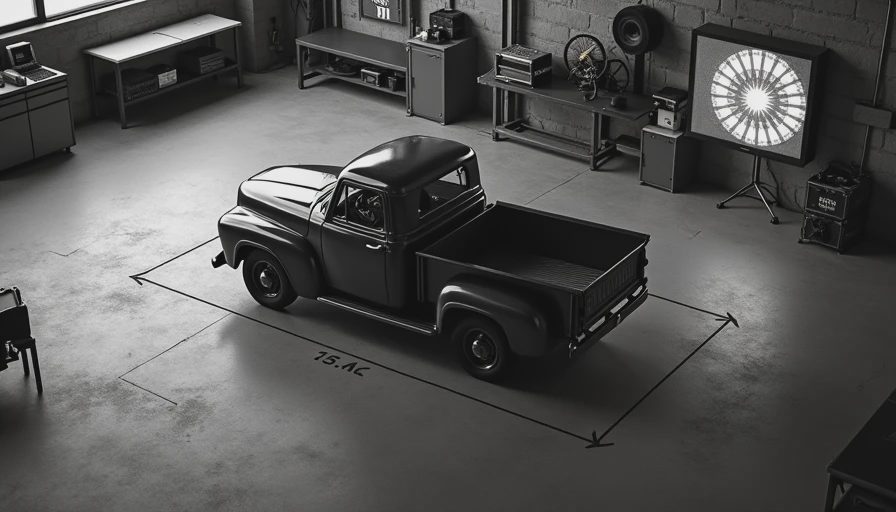
Bring a 25-foot tape, a notepad, and a level. Start with overall length by measuring from the front-most bumper point to the rear-most bumper point. Do not measure only the sheet metal; replacement bumpers can add an inch or two. Next, measure width at the body and again from mirror edge to mirror edge. Record height at the highest point, then measure wheelbase from axle center to axle center.
Look underneath before trusting any seller's numbers. Measure the bed floor from the inside front wall to the closed tailgate, check the distance between the wheel wells, and look for riveted frame extensions or old splice plates. A truck that has been converted from a service body or flatbed may not match normal pickup dimensions.
Check the door opening too. The cab itself may fit a tight space while the door cannot open far enough to get in. If you plan a restoration, leave room for jack stands, a rolling engine crane, and the inevitable parts pile that appears beside every project.
Why these numbers matter for parts and insurance
Knowing the 1972 ford f250 2door dimensions helps with more than parking. Bed caps, camper shells, tonneau covers, running boards, bumpers, and replacement beds are not automatically interchangeable. Verify wheelbase, bed length, and mounting points before buying a part described only as “fits 1967–1972 Ford truck.” That range can cover several configurations.
Insurance is another practical issue. A restored F-250 may need an agreed-value or classic-truck policy rather than ordinary daily-driver coverage, particularly if it has a high documented restoration cost and limited annual use. Keep receipts, photos, the VIN, and a written equipment list. A $4,000 stock truck and a $25,000 frame-off build should not be documented the same way.
My shop rule is simple: use published dimensions to narrow the search, then use your own tape measure before money changes hands. The 1972 ford f250 2door dimensions give you the map, but the actual truck tells the truth. Get the wheelbase, bed, width, and height on paper, and you will avoid the expensive surprise of discovering your new Ford does not fit the space or parts plan you built around it.