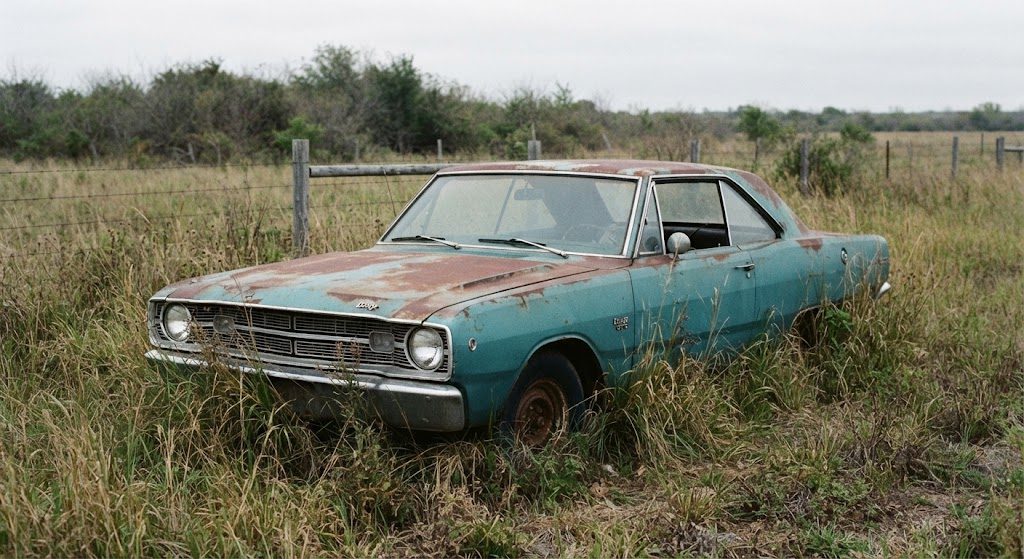
The car that taught me the most about garages wasn’t sitting in one. It was rotting in a field off a dirt road west of Ann Arbor, a 1968 Dodge Dart with a slant-six that hadn’t turned over since the Clinton administration. The guy who owned it wanted $2,800. I got it for $1,700 and a case of beer.
That car sat in my home garage for eighteen months while I brought it back to life. It taught me more about rust repair, parts scrounging, and the limits of a single-bay workspace than any shop manual ever could. But it also taught me something I should’ve known before the flatbed arrived: your garage needs to be ready for the project, not the other way around. Most field cars fail long before they ever get turned into drivers — not because the car was too far gone, but because the garage wasn’t prepared to handle what rolled in.
What “Ran When Parked” Actually Means
Every field car has a story, and most of those stories end with the same five words: “ran when parked.” That phrase is the used-car equivalent of “I’ll call you tomorrow.” It’s not a lie, exactly. It’s just missing a lot of important details.
The Clock Stopped for a Reason
Cars don’t get parked in fields because they were running perfectly. Something went wrong — a blown head gasket, a transmission that lost third gear, a wiring harness that caught fire behind the dash — and the owner decided it wasn’t worth fixing. Maybe he didn’t have the money. Maybe he didn’t have the space. Either way, the car sat, and every year it sat, that original problem got worse and brought friends. Moisture got into the cylinders. Rodents moved into the heater box. Tires dry-rotted. The gas turned to varnish.
When you see “ran when parked” in a classified ad, translate it in your head to “ran when parked, but hasn’t run since, and will need more than a battery and fresh gas.” If you go in with that expectation, you won’t be disappointed.
Rust — When It’s Cosmetic and When It’s Terminal
Surface rust on body panels is fine. You can sand it, treat it, and paint over it. What you can’t fix cheaply is structural rust — frame rails, torsion bar mounts, subframe connectors. Bring a screwdriver and a flashlight. Crawl under the car and poke at anything that’s supposed to hold weight. If the metal crumbles or you can push through it, walk away. I don’t care how cheap the asking price is. A car that’s rotting from the bottom up is a parts donor, not a project.
What Your Garage Needs Before the Car Arrives
I learned this the hard way with the Dart. I had a single-car garage with a workbench, a tool chest, and zero room to walk around a vehicle that didn’t run. The first week, I had to push the car out into the driveway every morning just to open the passenger door. That got old fast. Here’s what your garage needs before you drag home a field find.
Enough Floor Space to Work All the Way Around
A project car takes up more room than you think. You need clearance on all four sides — at least three feet — to pull wheels, open doors, and move a floor jack around without repositioning the car every time. If your garage is a single bay with storage along both walls, you’re going to be working in a tunnel. That works for oil changes. It doesn’t work for pulling a dashboard or replacing floor pans.
A Plan for the Fluids That Are About to Hit Your Floor
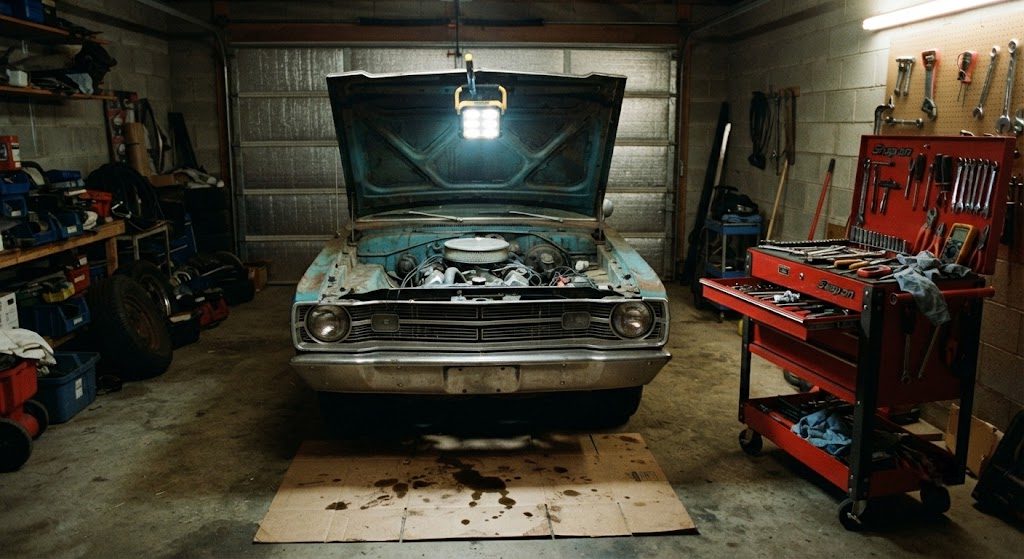
Field cars leak. Every fluid that was in it when it got parked is going to end up on your floor within the first month — coolant, oil, transmission fluid, brake fluid, gasoline. If your floor is bare concrete, accept that it’s going to stain. If it’s epoxy, you’re about to find out how good the clear coat really is. I lay down a large sheet of cardboard or a cheap plastic tarp under any project that’s been sitting for more than five years. It catches the initial drips and makes the first few weeks of cleanup a lot less miserable.
Lighting That Reaches Into Every Corner
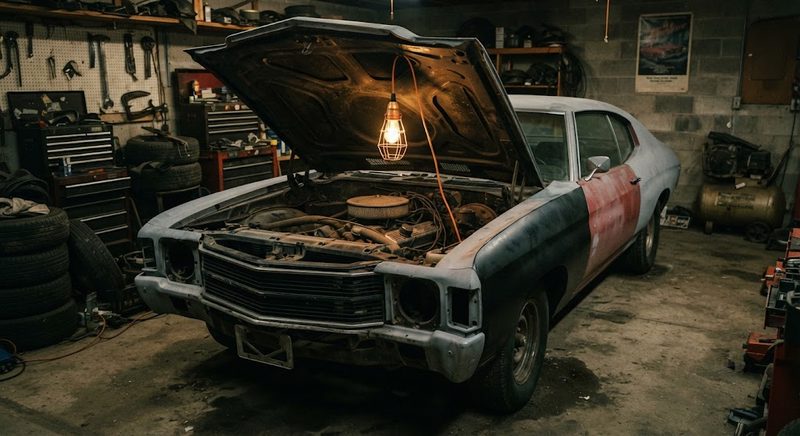
A field car comes with surprises, and most of them are hiding in dark places. You’ll be under the dash looking for chewed wires. You’ll be in the trunk checking the floor pan from above. You’ll be on your back tracing brake lines. One overhead fixture won’t cut it. Before the car shows up, make sure you’ve got a good drop light, a headlamp, and at least one portable LED panel you can position wherever the work is. I didn’t have any of those for the Dart, and I spent more time holding a flashlight in my teeth than I did turning wrenches.
How to Spot a Hidden Gem in Two Blurry Photos
Most field-car listings have terrible photos. That’s actually an advantage if you know what to look for. Sellers who post clean, well-lit photos know what they’ve got and are pricing accordingly. The blurry-photo guy just wants the thing gone.
Look for Completeness, Not Beauty
You want a car that’s all there. Glass intact, trim present, interior complete even if it’s trashed. Missing parts are a headache, especially on older American cars where specific trim pieces and brackets can take months to track down. The Dart had a cracked dash pad and a ripped bench seat, but every piece of chrome was in the trunk and every window crank was still attached. That completeness saved me hundreds of hours and thousands of dollars.
The Engine Should Turn by Hand
Bring a breaker bar and the right socket for the crank pulley. Try to turn the engine over by hand. If it moves, you’ve got a foundation you can work with. If it’s seized, you’re looking at a full rebuild or a swap — not necessarily a dealbreaker, but it changes the math. The slant-six in my Dart turned with about forty pounds of effort. It still needed a head gasket, but the bottom end was solid.
Leo Chase once bought a 1970 F-100 out of a pasture without checking if the engine turned. He got it home, pulled the plugs, and found a cylinder full of rust and mouse nest. That truck sat in his garage for two years while he tracked down a donor engine. The deal wasn’t a deal after that.
Your Garage Decides Whether It’s a Deal or a Disaster
The best $5,000 car in the world is a bad investment if your garage can’t support it. You need floor space, light, a plan for the fluids, and the patience to handle surprises. The Dart turned into a great car — eventually. But the first three months in my single-car garage were a masterclass in what happens when the project shows up before the workspace is ready.
Bring the garage up to speed first. The field car can wait. It’s been sitting there this long. Another month won’t hurt it.