The first thing you notice about a three-bay shop when you walk in is the floor. Not because it's fancy — mine is sealed concrete with stains from fifteen years of brake fluid and differential oil that no amount of scrubbing will lift. But because the floor tells you where everything belongs. Bay One is diagnostics, closest to the scanner and the tool chest. Bay Two is heavy work — lifts, transmission jacks, the stuff that needs room to swing a breaker bar. Bay Three is my space. The Chevelle lives there when it's not in the home garage.
A guy walked into Bay One on a Wednesday morning and stood on that stained concrete like he owned it.
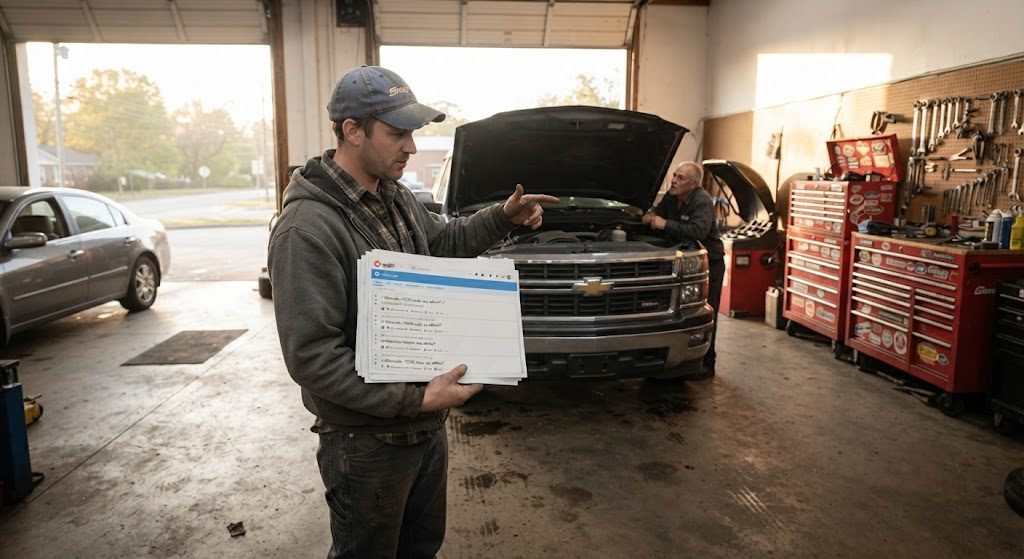
He had a printout from a Reddit thread, a 2012 Silverado in the lot, and a diagnosis he'd arrived at before I'd even pulled the hood release. "Throttle position sensor," he said, tapping the paper. "Symptoms match. I just need you to swap it out."
I looked at the paper. I looked at him. I looked at my tool chest — the one I'd spent years organizing so every socket and wrench was exactly where my hand expected it to be.
This was my shop. My floor. My rules. And my rule is: nobody diagnoses a car in my bays except me.
When a Customer Forgets Who Built the Room
Every mechanic knows this guy. He's done his research. He's watched the videos. He's scrolled through forums until 1 a.m. and now he's standing in your workspace telling you how to do your job. He's not a bad person. He's just forgotten that a garage is a place of expertise — not just a room with tools in it.
What Three Bays Mean
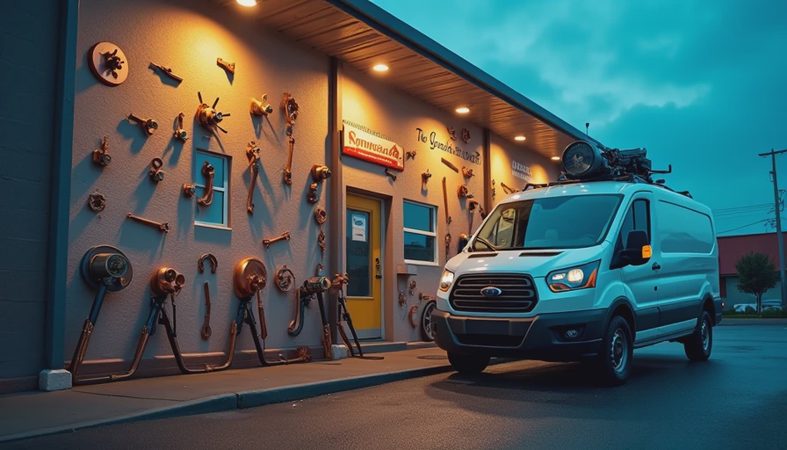
I designed this shop intentionally. Three bays, no more. The concrete floor was poured in 2016 when I left the dealership and signed the lease on this building. I sealed it myself — three coats over a weekend, and I've touched it up twice since then. The tool chests are arranged so I can reach any drawer from any lift without walking more than four steps. The lighting is laid out in zones so I can work in one bay without lighting the whole building at night.
A shop isn't just a building. It's a system. Every inch of this space was thought through by someone who's spent more hours on this concrete than most people spend in their own living rooms. So when a customer walks in and starts telling me what to do in my own shop, it's not just annoying — it's disrespectful to the space itself.
The Diagnosis That Wasn't His to Make
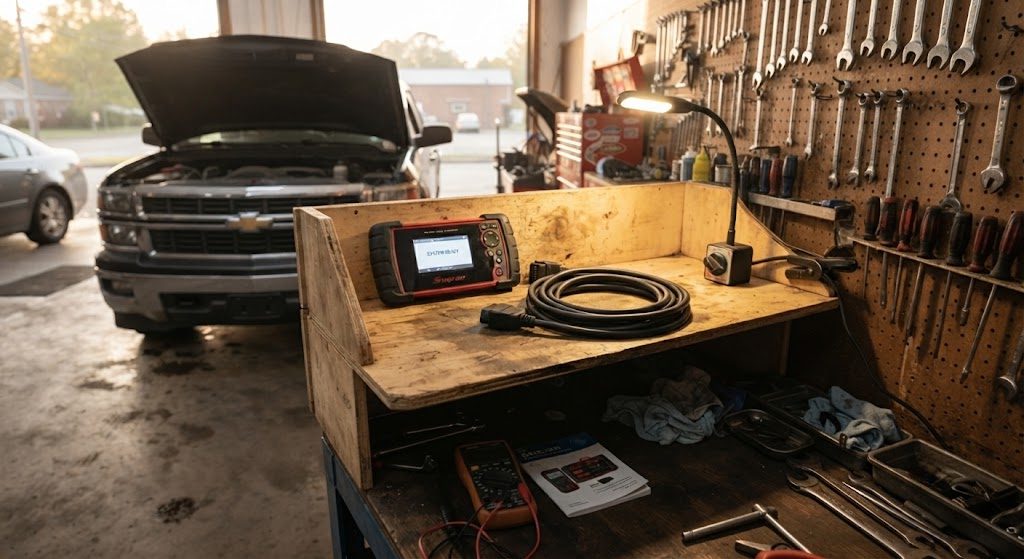
I let the guy talk. Then I opened the hood and plugged in my scanner — the good one, the one that lives on its own shelf above the workbench because diagnostic tools deserve their own home. The TPS data was clean. Voltage sweep smooth from idle to wide-open. No dead spots, no dropouts.
The problem was a chafed wiring harness rubbing against a bracket, three wires with insulation worn through. When the engine warmed up and the harness got soft, those wires would short against the metal. I showed him the damage. I showed him the scanner data. The fix would take thirty minutes and cost about six dollars in materials.
He didn't believe me. He wanted the TPS replaced anyway. I told him no.
The Garage Owner's Philosophy
This is where running your own shop gets philosophical. I could've taken his money. It would've been easier. Swap the part, charge the labor, let him figure out on his own that the stalling comes back next week. Plenty of shops operate that way. But this is my garage — the only one I've got — and I didn't build it to be a parts-installation service.
Your Space, Your Standards
Every garage has a personality. Some are chaos — tools everywhere, oil dry scattered across the floor, parts stacked in corners. Some are showrooms — epoxy floors, matching toolboxes, LED panels that make the place look like a surgical suite. Mine is somewhere in the middle. It's clean enough to find what I need and messy enough to prove I actually work here.
The point is, it's mine. I decide what happens in here. I decide which jobs I take and which ones I turn down. I decide that I won't install a part that I know won't fix the problem, even if the customer is demanding it. The floor I sealed, the lights I hung, the tool chests I organized — they're not just equipment. They're the physical evidence of what I've built and what I'm not willing to compromise.
What Happens When You Don't Respect the Space
The guy left angry. Two weeks later he called back. He'd taken the truck to another shop, paid for the TPS replacement, and the stalling came back the next day. That shop then found the same chafed wires I'd shown him and charged him again. He paid twice. He learned the hard way.
I'm not telling this story to make myself look good. I'm telling it because every garage — whether it's a three-bay shop or a single-car home setup — is a reflection of the person who works in it. When you walk into someone else's space, you respect their floor, their tools, and their rules. Or you don't get invited back.
This is my garage. You're welcome to bring your truck and your problems. But leave the diagnosis at the door. That's what the scanner and twenty-five years of turning wrenches are for.